How to Choose a Plumber: A 2026 Homeowner's Guide
Table of Contents
- Start with Local References and Online Reviews
- How to Verify Plumbing License and Insurance
- Questions to Ask a Plumber Before Hiring
- What to Look for in a Plumbing Estimate
- Red Flags and Scam Identification
- Emergency vs. Non-Emergency Hiring
- Post-Job Inspection Checklist
- Frequently Asked Questions
Last Updated: September 27, 2026
Start with Local References and Online Reviews
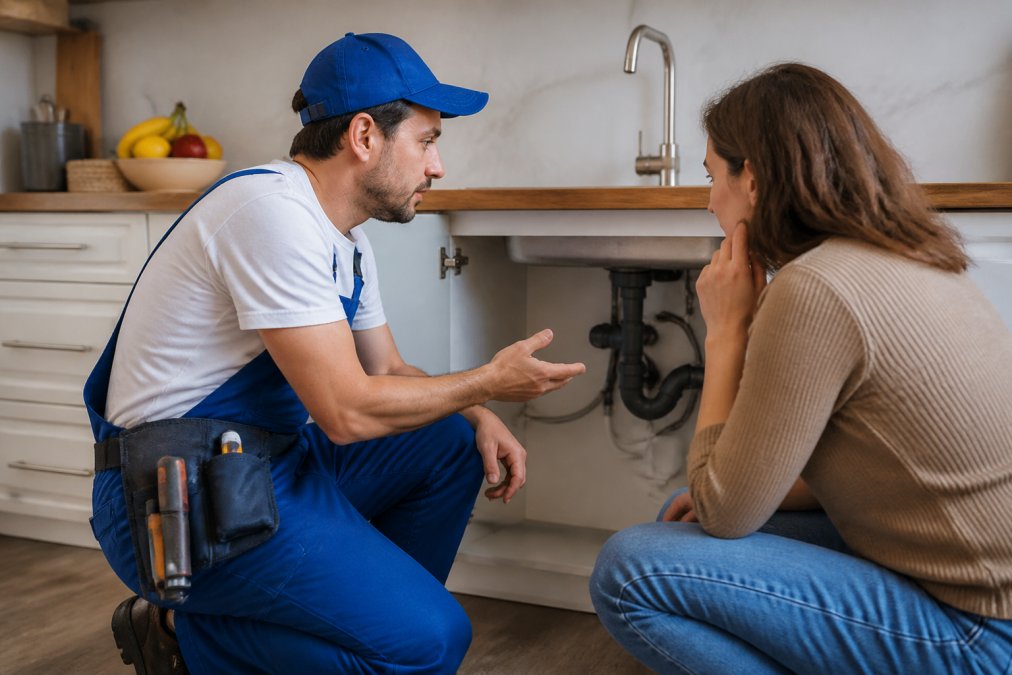
The fastest way to learn how to choose a plumber is to start where other homeowners already did the vetting: personal referrals and verified online reviews. A neighbor who watched a technician work in their own basement tells you more than any advertisement can. A locally owned plumbing company serving the Denver metro since 2009 hears the same thing from customers again and again: the plumbers they regret hiring were the ones they picked without checking anyone's track record first.
Here's a practical sequence that works:
- Ask three people you trust for a specific name, not just a company
- Cross-check that name against Google and Yelp reviews
- Look for reviews that mention the same problem you have
- Note how the company responds to negative reviews
How to Verify Plumbing License and Insurance
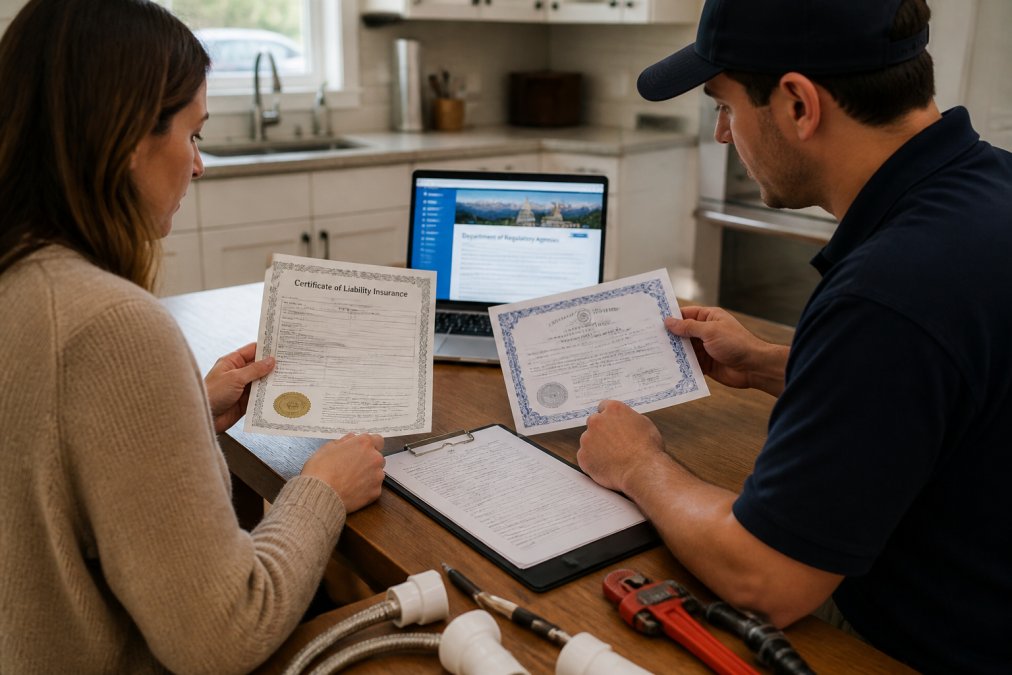
Verifying a plumbing license and insurance takes about ten minutes and is the step most homeowners skip. In Colorado, plumbing work requires a license, and a legitimate company carries general liability coverage and workers' compensation. Ask for the license number, then look it up yourself on the state's online database rather than trusting a photo of a card.
Questions to Ask a Plumber Before Hiring
The questions to ask a plumber before hiring should cover licensing, pricing structure, timeline, and who actually shows up. Ask them on the phone before you book. Vague answers are your signal to keep calling.
Ask directly:
- Are you licensed and insured, and what's your license number?
- Is this a flat-rate quote or an hourly rate plus parts and materials?
- Who will do the work, your employees or subcontractors?
- Is there a service call fee, and does it apply toward the repair?
- What's the warranty on labor, and what's the warranty on parts?
What to Look for in a Plumbing Estimate
What to look for in a plumbing estimate is a written document, not a verbal number. A proper estimate lists the scope of work, parts and materials by name, labor cost, and timeline. If the number only exists in a text message, you have a guess, not an estimate.
| Estimate Element | What Good Looks Like | Red Flag |
|---|---|---|
| Scope of work | Names the specific repair and location | "Fix leak" with no detail |
| Parts and materials | Lists fixtures and pipe by type | Blank or "misc." |
| Pricing structure | Flat-rate or hourly, stated clearly | "We'll figure it out later" |
| Timeline | Start and completion estimate | "Whenever we get to it" |
| Warranty | Labor and parts terms in writing | "It'll be fine" |
| Payment schedule | Deposit capped, balance due on completion | Full payment upfront |
| Change-order process | Written approval before extra work | Verbal "we found more" upsells |
The Contract Essentials Most Homeowners Never Ask About
This is where the real money and legal exposure sit. An estimate becomes a contract the moment you authorize work, so terms you accept verbally or by text can bind you. Before you sign or approve anything, confirm these items in writing:
- A capped deposit. A reasonable deposit covers materials the company must order. A demand for the full job cost upfront is the most common setup for a walk-away scam; your remedy is usually small-claims court, which is slow and capped by state limits.
- A payment schedule tied to milestones. Progress payments should follow completed stages, not calendar dates. The final payment should be due only after you have inspected the work and the job passes any required inspection.
- A written change-order rule. Any addition to the scope should require your signed or written approval with a revised price before the work continues. Without this clause, a technician can expand the job and bill you for it after the fact.
- A start and completion date, plus a remedy for delay. Open-ended timelines let a contractor deprioritize your job indefinitely.
- A warranty term stated in months or years, not "guaranteed." "Lifetime warranty" without a defined scope is marketing, not a term you can enforce.
- A right-to-cancel notice. For many in-home sales, federal rules give you a cooling-off period to cancel (the FTC). Ask for the notice in writing and read it before you sign.
- A lien waiver at final payment. In many states, a contractor or supplier who is not paid can file a mechanic's lien against your property even if you already paid the contractor. A signed lien waiver or release at final payment closes that exposure. Ask the company to provide one.
How to Compare Two Estimates Fairly
Comparing estimates line by line is hard because companies bundle differently: one quote folds the service call fee into the labor rate, another lists it separately; one prices a part as "included," another excludes it. To compare fairly, normalize every quote to the same four lines, total labor, total parts, fees, and warranty, then compare the totals, not the headline number.
Red Flags and Scam Identification
Scam identification comes down to pressure and vagueness. The clearest warning signs: a demand for full payment upfront, a quote given without looking at the problem, and a technician who arrives unannounced after a storm. Legitimate companies schedule visits and put numbers in writing.
Watch for these:
- Cash-only payment with no receipt or invoice
- Pressure to decide "right now" or the price changes
- A price that jumps once the work begins with no explanation
- No physical business address or verifiable license number
- A technician who won't let you watch or ask questions
The Mechanics of Common Plumbing Scams
Most guides stop at the warning signs. Understanding how the scams work lets you spot them mid-job, when you still have leverage.
Payment Protections That Actually Help You
How you pay matters as much as how much you pay:
- Pay by credit card when you can. Federal law gives you the right to dispute charges for services not delivered as agreed, and your card issuer is a faster remedy than small-claims court.
- Never pay the full amount before the work is complete and inspected. Tie the final payment to your walkthrough.
- Get a receipt or invoice for every payment, including the deposit. A cash payment with no paper trail is nearly impossible to recover.
- Keep the contract, the estimate, and all texts and emails. If a dispute escalates, this record is your evidence.
- Check the license before you pay, not after. A license number you verified in advance is the cheapest protection you have.
Emergency vs. Non-Emergency Hiring
Emergency and non-emergency calls follow different playbooks. A burst pipe or sewage backup needs a licensed emergency plumber tonight, at a premium after-hours rate. A dripping faucet, slow drain, or merely old water heater can wait for a scheduled visit at a normal rate.
Post-Job Inspection Checklist
- Water runs clear with no drips at every fixture touched
- No new leaks under sinks, at supply lines, or near the water heater
- The work area is clean and any debris is removed
- Permits were pulled if the job required them
- You have the invoice listing parts, labor, and warranty terms
- The technician explained what was fixed and any follow-up needed
If anything on the checklist fails, say so before paying. A reputable company fixes it on the spot or schedules a free return visit. A reputable company fixes it on the spot or schedules a free return visit.
Frequently Asked Questions
How do I know if a plumber is good?
Check for a valid state license, liability insurance, and workers' compensation coverage. Read online reviews and ask for local references. A good plumber will provide a written estimate, explain the scope of work, and offer a warranty on labor and parts. They should also be punctual and communicate clearly. Trust your instincts: if they pressure you or refuse to answer questions, look elsewhere.
How to avoid getting ripped off by a plumber?
Get multiple written estimates and compare line items. Avoid paying the full amount upfront; a deposit of 10-20% is standard. Never hire someone who demands cash only or refuses to put the agreement in writing. Verify the license and insurance yourself. Be wary of unsolicited offers or prices that seem too low. A reputable plumber will never pressure you into immediate decisions.
What is the 135 rule in plumbing?
The 135 rule is a guideline for pipe sizing: a 1-inch pipe can supply 135 fixtures, but this is rarely relevant for homeowners. For residential plumbing, the key is proper sizing for water pressure and drainage. When hiring a plumber, ask about their approach to pipe sizing and permits. They should follow local building codes and explain any deviations.
How much should I pay for a plumber?
Plumbing costs vary by job complexity, location, and time. For major work, flat-rate pricing is common. Always get a written estimate detailing parts, labor, and permits. Avoid choosing solely on price; focus on value and guarantees.
What should I look for in a plumbing company's credentials?
Look for a valid state plumbing license, general liability insurance, and workers' compensation. Check if they are bonded. Ask about the plumber's experience level (journeyman or master plumber). Verify the license number with your state's licensing board. Also, check for certifications in specialized areas like backflow prevention or gas lines. A reputable company will gladly provide this information.
What questions should I ask before hiring a plumber?
Ask: Are you licensed and insured? Can you provide a written estimate? What is the scope of work? Do you offer a warranty on labor and parts? Who will do the work (subcontractors)? How will you protect my home? What is the timeline? Do you handle permits? These questions help you gauge professionalism and avoid surprises.
Is it better to hire an independent plumber or a large company?
Both have pros and cons. Independent plumbers may offer lower rates and personalized service, but may lack backup for emergencies. Large companies often have more resources, faster emergency response, and warranties, but may charge more. Consider your needs: for complex jobs, a company with a team of licensed plumbers may be better; for small repairs, an independent might suffice. Always verify credentials regardless.
Choosing a plumber is really a test of patience: the best hire is rarely the fastest answer, it's the one you verified before you needed them. When you want a licensed, insured team that shows up on time, quotes transparently, and stands behind the work, Plunge Plus handles everything from emergency leaks to water heater replacement across the Denver metro. Request service online and get a clear, upfront estimate before any work begins.
