How to Find Hidden Water Leaks: 7-Step Guide
Table of Contents
- Why Hidden Water Leaks Cost Denver Homeowners More Than They Expect
- Signs of a Hidden Water Leak You Should Never Ignore
- How to Check for a Water Leak With a Water Meter
- How to Find a Water Leak Behind a Wall
- Hidden Water Leak Detection Tools the Pros Use
- Common Mistakes That Make Hidden Water Leaks Worse
- When to Call a Licensed Plumber for Hidden Water Leaks
- Frequently Asked Questions
Last Updated: October 5, 2026
Why Hidden Water Leaks Cost Denver Homeowners More Than They Expect
A hidden water leak is a water escape you cannot see, usually running behind a wall, under a slab, or beneath a floor. It stays invisible while it soaks wood, warps drywall, and feeds mold. That is why hidden water leaks in Denver cost far more than the repair itself.
Denver sits on expansive clay soil. That soil swells when wet and shrinks when dry, and it shifts the ground under a home's foundation and buried water lines. A small underground leak keeps that soil wet in one spot, and the movement can crack a slab or a pipe joint.
This guide from Plunge Plus walks through steps to help find a leak before it spreads. We are a locally owned plumbing company, and we have worked on Denver homes since 2009.
Signs of a Hidden Water Leak You Should Never Ignore
The clearest signs of a hidden water leak are a water meter that never stops moving, warm spots on the floor, and a musty smell with no visible source. Catching these early is the difference between a small fix and a torn-up room.
Watch for these signals:
- A water bill that jumps with no change in use
- The sound of running water when everything is off
- Damp or discolored patches on walls, ceilings, or floors
- Peeling paint or bubbling drywall
- A musty, earthy smell in one room
- Warm spots on a slab floor, which point to a hot water line
- Cracks in the foundation or tile that keep coming back
One sign alone can be a false alarm. Two or three together almost always mean a real leak.
How to Check for a Water Leak With a Water Meter
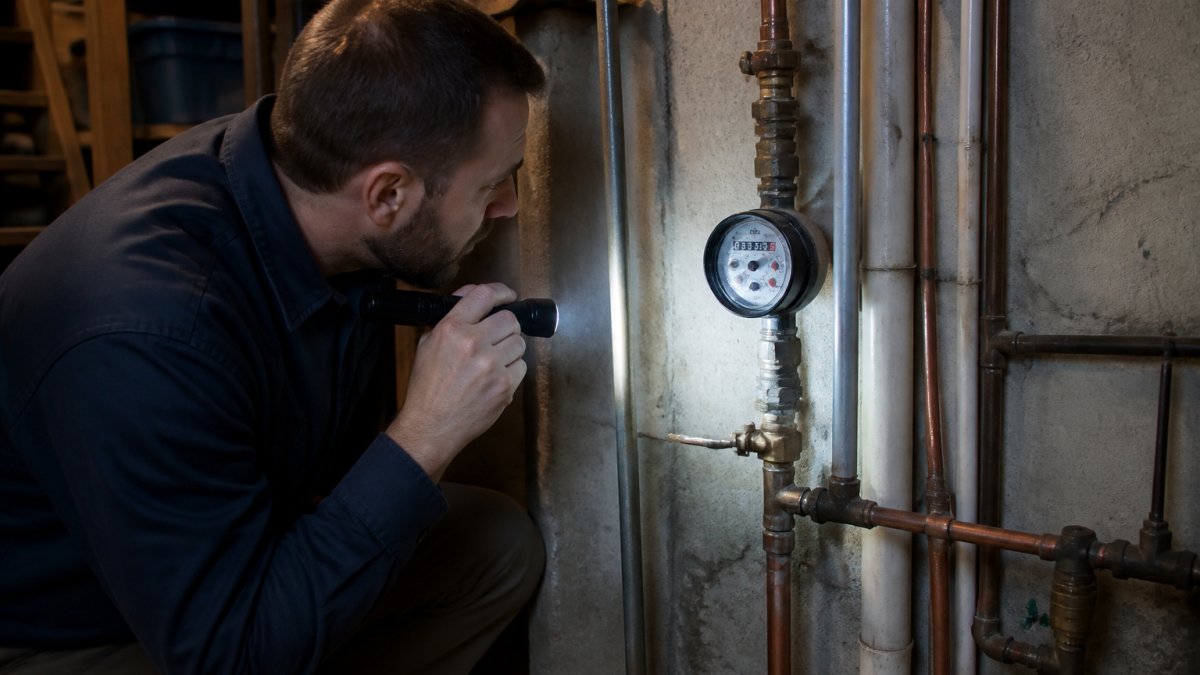
You can check for a water leak with a water meter in about 20 minutes, and it costs nothing. The meter is the most honest tool you have. If no water is running anywhere in the house, the meter should sit completely still.
Step 1: Shut Off Every Fixture and Appliance
Turn off all water inside and outside the house. That means faucets, showers, the dishwasher, the washing machine, and the ice maker. Also shut off outdoor spigots and any irrigation system.
Then check the whole house twice. A running toilet is the most common thing people miss, and it looks exactly like a hidden leak on the meter.
Step 2: Read the Meter, Wait, and Read It Again
Find your meter, usually near the curb or in the basement. Write down every number you see. Wait 30 to 60 minutes without using any water. Read it again.
If the numbers moved, water is escaping somewhere. If the leak indicator triangle or dial is spinning, the leak is active. A steady, slow creep points to a small hidden leak. A fast spin means a bigger break.
How to Find a Water Leak Behind a Wall
To find a water leak behind a wall, start with the fixtures on the other side of that wall, not the wall itself. Most "wall leaks" are actually a supply line, drain, or fixture leaking inside the wall cavity.
Check the Usual Suspects First
Look at every fixture that shares that wall before you cut anything:
- Shower and tub valves and the caulk line around them
- Toilet supply lines, shutoff valves, and the wax ring
- Sink traps and the connections under the cabinet
- The water line to the fridge or dishwasher
- Any upstairs bathroom sitting above the damp spot
A slow drip from a shower valve can travel along a stud and show up on a ceiling far from the source.
When the Wall Itself Is the Clue
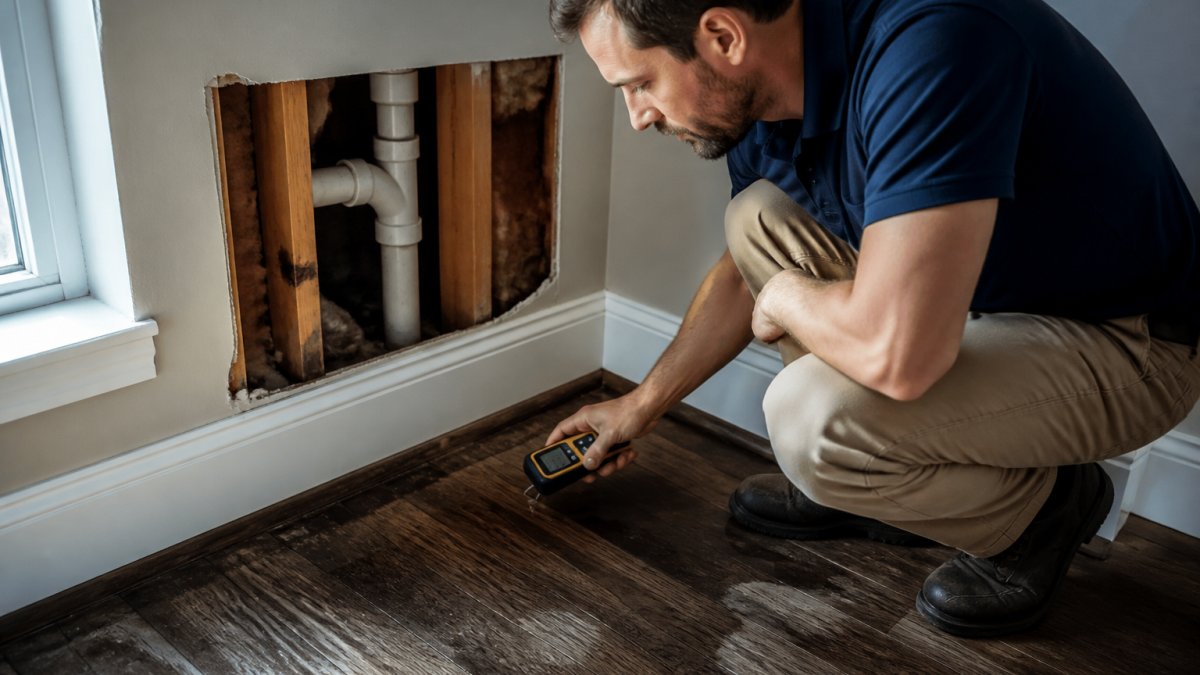
If the fixtures check out clean, the wall is telling you where to look. Feel for cool, damp patches and look for paint that has bubbled or pulled away. A moisture meter gives you a reading without opening anything up.
A common mistake is cutting a big hole right at the stain. Water travels down and sideways, so the wet spot is often well below the actual leak. Test a wider area first, and open the wall only where the meter reads wet.
Hidden Water Leak Detection Tools the Pros Use
Plumbers use various tools to locate hidden water leaks without tearing a home apart. These tools find the leak first, so the repair stays small.
Here is what each tool does:
| Tool | What It Finds | Best For |
|---|---|---|
| Acoustic microphone | Sound of water escaping | Pipes under slabs and in walls |
| Thermal imaging camera | Temperature differences | Hot water lines and slab leaks |
| Moisture meter | Damp readings in materials | Confirming exactly where to open a wall |
| Pressure gauge | Line that will not hold pressure | Supply lines and irrigation |
| Video camera | Cracks inside drain lines | Drain and sewer leaks |
A homeowner can buy a basic moisture meter for a reasonable price and use it to narrow things down. The rest are pro tools. They pay for themselves by keeping the repair to one small opening instead of a whole wall.
Common Mistakes That Make Hidden Water Leaks Worse
The biggest mistakes are waiting to act, cutting into the wrong spot, and guessing at the source. Each one turns a small repair into a big one.
Avoid these:
- Waiting for the bill to spike twice. By then, the damage is often already done.
- Cutting drywall at the stain. The leak is usually above or beside it.
- Ignoring the outdoor system. A broken sprinkler line shows up on the meter too.
- Sealing a damp wall with paint. It traps moisture and grows mold behind the finish.
- Skipping the meter test. It is free, and it tells you whether you even have a leak.
The Denver clay soil makes one more mistake costly. Water from a slow underground leak keeps the soil around your foundation wet in one spot. That spot swells, the rest shrinks, and the movement cracks concrete and pipes. Fixing the leak early protects the foundation, not just the pipe.
When to Call a Licensed Plumber for Hidden Water Leaks
Call a licensed plumber when the meter test confirms a leak but you cannot find the source, or when the leak is under a slab. A pro can pinpoint it with the right tools and fix it right the first time.
Reach out right away if you notice any of these:
- The meter still moves after you shut off the main
- A warm spot or a crack in a slab floor
- Water stains that keep spreading after you stop using the fixture
- A musty smell you cannot trace
- Any leak near a gas line or electrical panel
At Plunge Plus, our technicians are licensed and insured, and we tell you the price before we start. If you are searching for a plumber near me in Denver, we serve the city and the surrounding areas, including Arvada, Westminster, Commerce City, and Wheat Ridge. We have been locally owned and operated since 2009.
For general guidance on water safety and home maintenance, the U.S. Environmental Protection Agency's WaterSense program offers free resources on finding and stopping household water waste. The U.S. Centers for Disease Control and Prevention guidance on mold after water damage explains why a damp wall needs fast attention, and the U.S. Department of Energy tips on home water heating and leaks covers how a hot water leak drives up energy costs.
Frequently Asked Questions
What are the signs of a hidden water leak in a house?
The most common signs of a hidden water leak include unexplained spikes in your water bill, the sound of running water when nothing is on, musty or damp odors, warped flooring, peeling paint, and warm spots on the floor from a slab leak. In Denver, where soil shifts with freeze-thaw cycles, these signs can appear sooner than homeowners expect. If you notice two or more, treat it as an active leak until a meter test proves otherwise.
How do I check my water meter for a leak?
Turn off every fixture and appliance that uses water, including the ice maker and irrigation system. Write down the meter reading, wait 30 to 60 minutes without using any water, then read it again. If the numbers moved, you have a leak somewhere between the meter and your home. That method works for any home, and it is the fastest way to confirm a hidden water leak before calling a plumber.
How do plumbers find leaks under concrete or behind walls?
Plumbers use various tools to locate leaks without tearing the home apart. Acoustic tools can pick up the sound of water escaping a pipe, while thermal cameras can show temperature differences behind walls and under slabs. In Denver, slab leaks are often tied to expansive clay soil that shifts with moisture, so pinpointing the leak first saves homeowners from unnecessary demolition and repair costs.
When should I call a plumber for a hidden water leak?
Call a licensed plumber when the meter test confirms a leak, when you see water stains or feel warm spots on the floor, or when you smell mold. Small hidden leaks can damage foundations, drywall, and flooring within weeks. Plunge Plus has served the Denver area since 2009 with licensed and insured technicians, and can locate the leak before it turns into a major repair.
A hidden leak never fixes itself, and in Denver's clay soil it gets worse with every wet season. If the meter test points to a leak you cannot trace, Plunge Plus can find it with acoustic and thermal tools and repair it before it reaches your foundation. We offer transparent pricing, licensed and insured technicians, and a team that treats your home with care. Get started with Plunge Plus and fix the leak right the first time.
