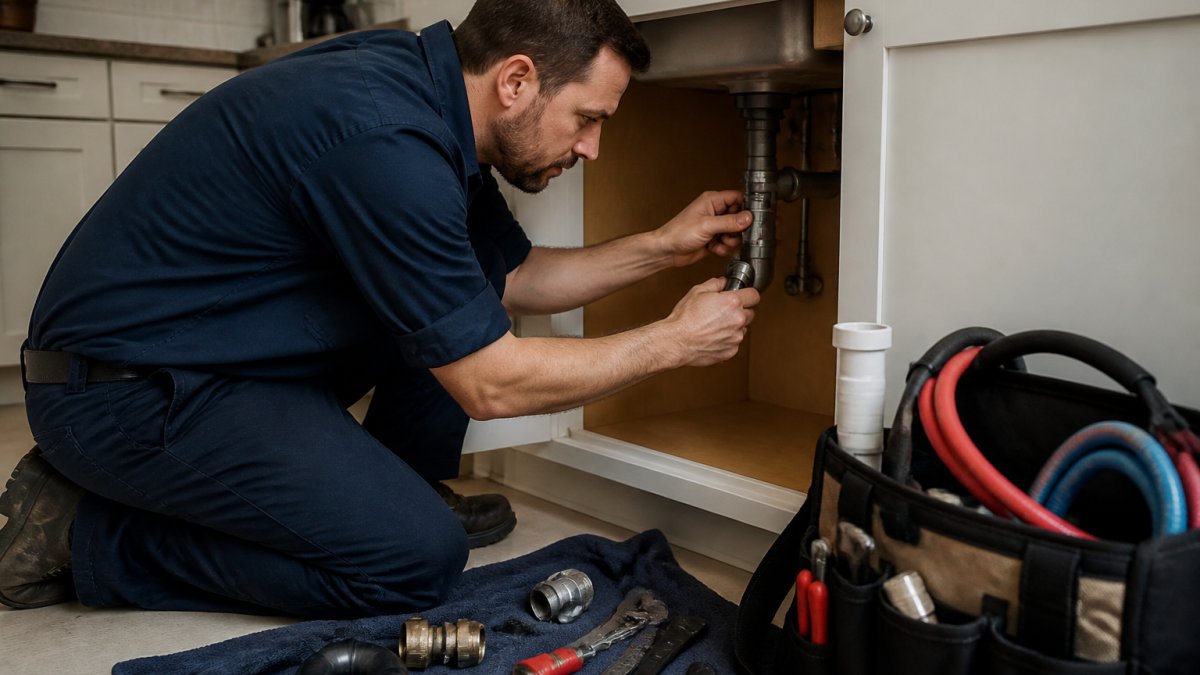
Licensed Plumbing Contractors in Denver: How to Hire
Table of Contents
- What a Licensed Plumbing Contractor in Denver Actually Proves
- How to Run a Plumber License Lookup in Colorado
- Why Insured Plumbers in Denver Protect Your Home and Wallet
- Questions to Ask a Plumber Before Hiring
- The Plumbing Estimate Checklist Every Homeowner Should Use
- Local Versus National: Choosing Licensed Plumbing Contractors in Denver
- Conclusion
- Frequently Asked Questions
Last Updated: October 17, 2026
What a Licensed Plumbing Contractor in Denver Actually Proves
A licensed plumbing contractor in Denver holds a credential issued under Colorado law, and that piece of paper does two jobs. It confirms the contractor passed the state's trade exam and met the experience requirement. It also gives you a paper trail if the work goes wrong. At Plunge Plus, we have worked Denver homes since 2009, and we can tell you the license is the floor, not the ceiling.
Here is the part most homeowners miss: a license proves minimum competence, not quality. It tells you the contractor cleared a bar the state set. It does not tell you whether they answer the phone at 2 a.m. when a supply line bursts under your kitchen sink.
That distinction matters because Denver's soil makes plumbing harder than it looks. The expansive clay under much of the metro shifts with every wet and dry cycle, and that movement stresses buried lines year after year. A contractor who understands local ground conditions will diagnose a recurring drain problem differently than one who just snakes the line and leaves.
Plumbing contractors who carry the right credentials also carry accountability. The license ties to a state database you can search. The insurance ties to a policy that pays out when something breaks. Below, we walk through exactly how to check both, what to ask before you sign, and how to read an estimate so the final bill matches the number you agreed to.
How to Run a Plumber License Lookup in Colorado
The state runs the verification, and it takes about five minutes. Colorado's licensing authority maintains a public database where you can search any plumber by name or license number. According to the Colorado Department of Regulatory Agencies license lookup, you can confirm status, expiration date, and any disciplinary history in one search.
Run the lookup before you let anyone start work. Ask for the license number directly, then type it in yourself rather than trusting a number printed on a business card.
Plumber license lookup Colorado searches should confirm four things:
- Status: Active, not expired or suspended
- License type: Master or journeyman, matching the scope of your job
- Discipline: Any complaints or actions on record
- Business affiliation: The license ties to the company sending the crew
A master plumber can pull permits and supervise work. A journeyman works under supervision. For a water heater replacement or a repipe, you want a master on the job or overseeing it.
Why Insured Plumbers in Denver Protect Your Home and Wallet
Insurance is the difference between a bad day and a financial disaster. Insured plumbers in Denver carry general liability coverage, which pays when a crew member cracks a pipe and floods your finished basement. Workers' compensation covers the crew if someone gets hurt on your property.
Ask for a certificate of insurance and call the insurer to confirm it's current. A certificate can be forged or expired, and a quick phone call settles it.
Here's what most guides get wrong: they treat insurance as a checkbox. In practice, the coverage limit is what matters. A policy with a low limit may not cover a full basement restoration. Ask what the general liability limit is and whether it's per-occurrence or aggregate.
Uninsured work creates a specific trap. If an uninsured technician damages your home, your homeowner's policy may cover it, but your premium can rise and your claim history follows you. If an uninsured worker gets hurt on your property, the liability question gets ugly fast.
Questions to Ask a Plumber Before Hiring

The right questions surface problems before they cost you money. The questions to ask a plumber before hiring fall into four groups: credentials, pricing, timeline, and warranty.
Start with credentials. "What's your license number, and who carries your insurance?" Then move to pricing: "Is this a flat quote or an hourly rate, and what triggers extra charges?" On timeline: "When will you actually arrive, and will you call if you're running late?" On warranty: "What's covered, and for how long?"
The arrival question matters more than people think. A crew that shows up six hours late without a call is telling you how they handle everything else. At Plunge Plus, we hear this complaint constantly from homeowners who hired on price alone.
Then ask the diagnostic question: "How will you find the problem before you start cutting?" A contractor with a real diagnostic process will describe it. One who says "we'll figure it out when we open the wall" is guessing on your dime.
The Plumbing Estimate Checklist Every Homeowner Should Use
A good estimate is specific enough that you could hand it to a different contractor and get the same result. Use this plumbing estimate checklist to score any quote you receive:
- Scope written in plain language, not trade jargon
- Parts listed by type and brand, not "misc. materials"
- Labor broken out separately from parts
- Permit fees named as a line item
- Disposal and cleanup included
- Warranty terms stated in writing with a length
- Payment schedule tied to milestones, not upfront
- Change-order process described
- Start date and estimated completion date
- Emergency or after-hours rate disclosed
Score each quote against the list. A quote that misses three or more items is a quote that will grow.
Transparent pricing means the number you approve is the number you pay unless you approve a change. Ask directly: "What could make this estimate go up, and how would you tell me before you spend the money?" A contractor with a real answer has done this before.
Local Versus National: Choosing Licensed Plumbing Contractors in Denver
Choosing between a local shop and a national chain comes down to who answers when something goes wrong. Licensed plumbing contractors in Denver who live in the metro tend to know the housing stock, the soil, and the permit office. That local knowledge shortens diagnosis time.
Denver's older neighborhoods carry a specific set of problems: galvanized supply lines nearing the end of their life, clay sewer laterals cracked by ground movement, and water heaters installed in tight basement corners. A local contractor has seen the same failure a hundred times. That pattern recognition is worth real money when you're paying by the hour.
National chains bring standardized processes and call-center dispatch. That can work well for routine work. It tends to fall apart when you need someone to reason through an unusual failure in an old house.
If you're searching for a plumber near me in the metro, check the service area before you call. A shop based in Denver may or may not cover Westminster, Arvada, or Commerce City without a trip charge. Ask about the drive fee upfront so it doesn't appear on the invoice.
Conclusion
The hardest part of hiring a plumber isn't finding one. It's knowing whether the one you found will show up, quote honestly, and stand behind the work. That's why we built Plunge Plus around licensed and insured technicians, transparent pricing, and a locally owned operation that has served the Denver area since 2009.
We fix it right the first time, and we treat your home like it's ours. If you're tired of surprise bills and no-show crews, request service online with Plunge Plus and get a straight answer before anyone picks up a wrench.
Frequently Asked Questions
Do plumbers in Denver need to be licensed?
Yes. Plumbing work in Denver requires a license, and the city issues trade licenses for plumbing contractors and journeymen. Ask for the license number before any work begins, then confirm it through the state or city lookup rather than relying on a logo on a van. A licensed plumbing contractor carries the credential in their own name, which means there is a record and a regulator to contact if something goes wrong on your property.
How do I verify that a plumber is licensed in Denver?
Start with a plumber license lookup Colorado offers through state and city databases. Search the contractor's business name and the individual technician's name, then match the license number to the one printed on the estimate. Confirm the license is active, not expired or suspended, and check that the license type covers the work you need, such as water line or water heater work. Save a screenshot of the result for your records.
How can I tell if a plumbing contractor is insured?
Ask for a certificate of insurance and read it rather than glancing at it. You want to see general liability coverage and workers' compensation listed, with policy dates that are current. Call the number on the certificate to confirm the policy is active. Insured plumbers in Denver will hand this over without hesitation; a contractor who stalls or says the paperwork is in the truck is a warning sign worth taking seriously.
What should a plumbing estimate include?
A usable estimate names the specific work, the parts and materials, the labor, and the total, plus whether permits are included. It should state the diagnostic fee, the payment schedule, and what happens if the job uncovers something unexpected behind a wall. Use a plumbing estimate checklist and compare two or three written quotes line by line. Verbal estimates leave you with no proof of what was agreed, so ask for it in writing before work starts.
