Plumbing Maintenance for Denver Homes: 2026 Guide
Table of Contents
- Why Plumbing Maintenance Matters for Denver Homes
- Your Home Plumbing Maintenance Checklist, Season by Season
- Hard Water Effects on Plumbing in the Denver Metro
- How to Prevent Frozen Pipes Before the First Hard Freeze
- Water Heater Maintenance That Extends Its Life
- Common Mistakes Denver Homeowners Make With Plumbing
- When to Call a Professional Plumber
- Frequently Asked Questions
Last Updated: October 21, 2026
Why Plumbing Maintenance Matters for Denver Homes
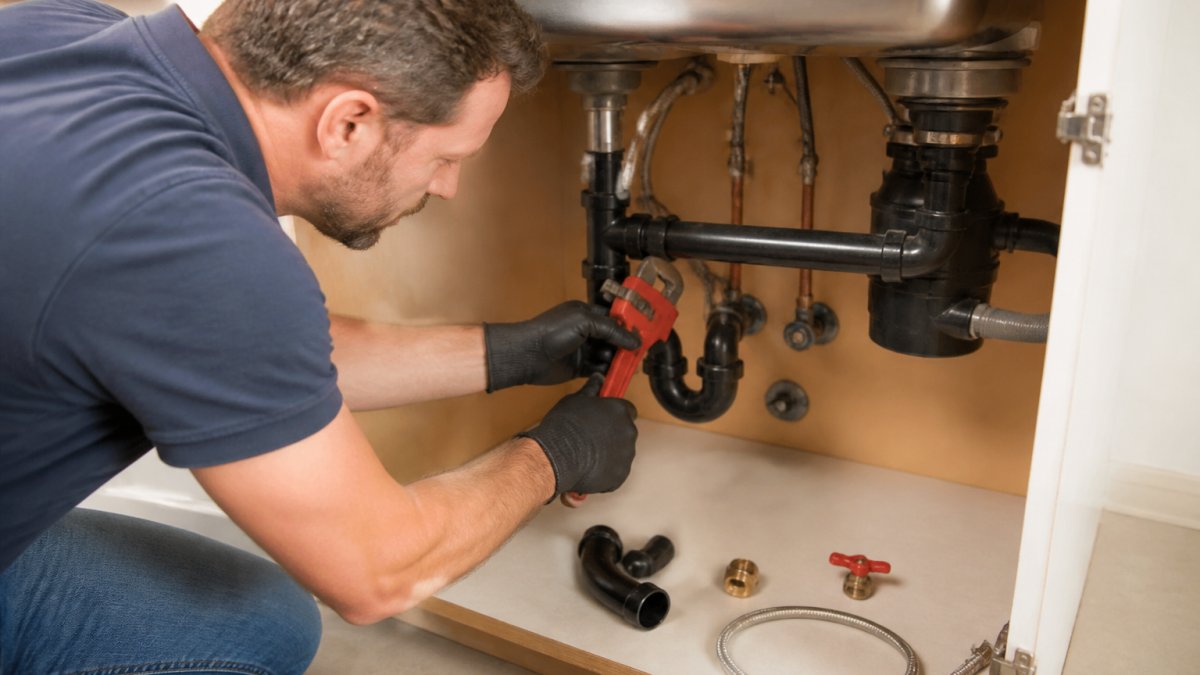
Plumbing maintenance for Denver homes is the practice of inspecting, adjusting, and protecting the pipes, fixtures, drains, and water heater on a set schedule instead of waiting for something to burst. The payoff is simple: fewer emergency calls, longer equipment life, and no surprise water damage. This guide from Plunge Plus covers the tasks that actually matter in this climate and soil, month by month.
Denver homes face a specific combination that punishes neglected plumbing: hard water, expansive clay soil that shifts with moisture, and a freeze-thaw cycle that runs from October into April. A pipe that survives a decade in a mild coastal city can fail here in half that time. Below, we'll show you exactly what to check and when, so you're not the homeowner calling at midnight with water in the basement.
Your Home Plumbing Maintenance Checklist, Season by Season
A home plumbing maintenance checklist works best when it's split into two passes: a warm-season outdoor check and a cold-season indoor walkthrough. Most problems we see in Denver trace back to a skipped seasonal task, not a manufacturing defect.
| Season | Focus | Key Tasks | Frequency |
|---|---|---|---|
| Spring | Outdoor recovery | Inspect spigots for freeze cracks, check irrigation backflow, test sump pump | Once, after last freeze |
| Summer | Water supply | Check supply lines, test shutoff valves, flush water heater | Once, mid-season |
| Fall | Freeze prep | Insulate exposed pipes, disconnect hoses, locate main shutoff | Once, before first freeze |
| Winter | Monitoring | Watch for frost on pipes, run trickle during deep cold, check for leaks | Monthly |
Spring and Summer: Outdoor Spigots and Irrigation
Spring is when freeze damage from the past winter shows up. Walk the exterior of the house and open each hose bib with the hose disconnected. A spigot that drips from the stem, or one that won't hold pressure, likely cracked during a hard freeze. Check the irrigation system's backflow preventer for the same reason, and test any sump pump by pouring a bucket of water into the pit to confirm it kicks on.
Summer is the season for the supply side. Turn every shutoff valve under sinks and behind toilets fully closed and back open once. Valves that haven't moved in years seize, and a seized valve turns a small repair into a flooded cabinet.
Fall and Winter: The Cold-Weather Walkthrough
The fall walkthrough is the one that saves you the most money. Disconnect garden hoses so water can't sit in the spigot and freeze. Find your main water shutoff, tag it, and make sure everyone in the house knows where it is. Insulate any exposed pipe in the garage, crawlspace, or along an exterior wall.
Winter is about vigilance. During a stretch of single-digit nights, open cabinet doors under sinks on exterior walls so warm air reaches the pipes, and let a pencil-thin trickle run from the farthest faucet. Moving water resists freezing far better than still water.
Hard Water Effects on Plumbing in the Denver Metro
Hard water effects on plumbing show up slowly and then all at once. Denver's municipal water carries a meaningful mineral load, and those dissolved calcium and magnesium ions deposit as scale inside pipes, on faucet aerators, and across the heating element of your water heater. Scale narrows the pipe's interior, which drops pressure and makes the system work harder.
The visible signs are worth knowing: white crust on faucets, spots on glassware, soap that won't lather, and a water heater that rumbles. That rumbling is scale cracking off the tank bottom as it heats. Left alone, scale shortens the life of every appliance that touches hot water.
A whole-home water softener is the standard fix. If you'd rather not install one, flush the water heater annually and clean aerators every few months to keep scale from compounding. Testing your water's hardness first tells you whether a softener is worth the investment. The U.S. Geological Survey's water hardness overview explains how hardness is measured and what the numbers mean for a household.
How to Prevent Frozen Pipes Before the First Hard Freeze
You prevent frozen pipes by sealing cold air out and keeping a trickle of water moving through the lines most exposed to it. In Denver, the first hard freeze can arrive earlier than homeowners expect, so the work needs to be done by mid-October, not Thanksgiving.
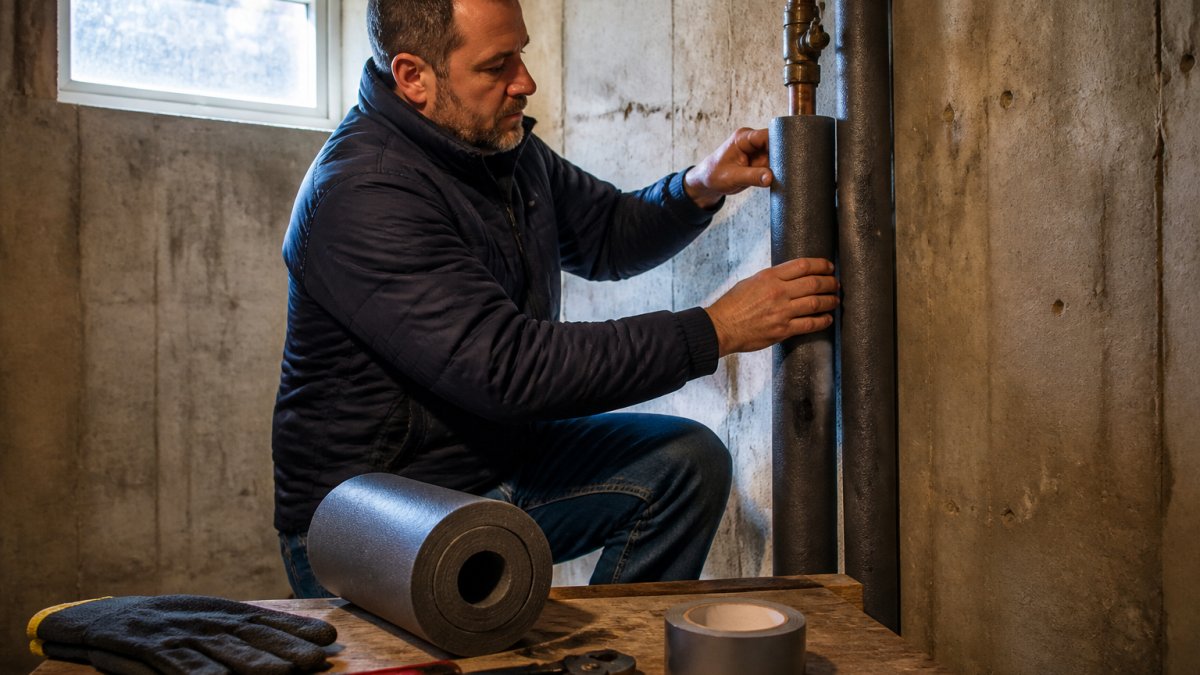
Start with air sealing. Cold drafts in a crawlspace or along a rim joist cool pipes far faster than still air. Close foundation vents for the season where appropriate, and stuff insulation into gaps where pipes pass through exterior walls. Then identify your vulnerable runs: any pipe in an unheated garage, a crawlspace, an exterior wall, or near a foundation vent.
- Insulate every exposed pipe with foam sleeves, especially in unheated spaces
- Disconnect and drain outdoor hoses and shut off exterior spigots at the interior valve
- Keep the thermostat at 55°F or higher even when you're away
- Open cabinet doors under sinks on exterior walls during cold snaps
- Let a thin trickle run from the faucet farthest from the main during deep freezes
If a pipe does freeze, shut off the main before it thaws, because the damage happens when ice melts and water finds the crack.
Water Heater Maintenance That Extends Its Life
Water heater maintenance comes down to two habits: draining sediment and testing the safety valve. Sediment collects on the tank bottom, insulates the burner from the water, and forces the unit to run longer. In a hard-water city, that buildup is the leading reason tanks fail early.
Once a year, connect a hose to the drain valve at the tank's base and flush a few gallons into a bucket until the water runs clear. While you're there, lift the lever on the temperature and pressure relief valve to confirm it discharges and reseats. A stuck relief valve is a safety issue, not just a maintenance one. The U.S. Department of Energy's water heating guidance covers how sediment and thermostat settings affect efficiency.
If your heater keeps failing every couple of years, the cause is usually sediment and scale, not bad luck. Annual flushing and a softener where hardness is high solve both.
Common Mistakes Denver Homeowners Make With Plumbing
The biggest mistake we see is treating plumbing as reactive. Homeowners call when something breaks, never before, and then wonder why the same drain clogs every spring. The second mistake is ignoring the local soil. Denver's expansive clay swells when wet and shrinks when dry, and that movement stresses underground lines and foundation-adjacent pipes. A slow leak or a recurring backup is often a soil-movement symptom, not a simple clog.
A few more we'd flag:
- Pouring chemical drain cleaner down a recurring clog instead of finding the cause
- Skipping the annual water heater flush because "it still works"
- Leaving hoses connected through the first freeze
- Never locating the main shutoff until an emergency
- Ignoring a dripping outdoor spigot until it cracks the wall
When to Call a Professional Plumber
Call a professional when the problem involves the main line, the water heater's safety components, gas piping, or anything behind a wall. Those jobs require licensed, insured technicians and, in many cases, permits. A homeowner can handle aerator cleaning, hose disconnection, and basic insulation. Beyond that, the risk of a small fix turning into water damage climbs fast.
We're often asked how to find a reliable plumber near me in the Denver area. Ask three questions: are the technicians licensed and insured, is pricing quoted upfront, and do they service your suburb. Plunge Plus has served Denver and the surrounding communities since 2009 as a locally owned and operated business, with transparent pricing and licensed, insured technicians. If you're in Westminster, Arvada, or Commerce City, we cover those areas.
Frequently Asked Questions
How often should you maintain the plumbing in your home?
A quick walkthrough once a month catches most problems early: check under sinks for dampness, look for rust on supply lines, and test shutoff valves. Twice a year, do a fuller inspection that includes the water heater, washing machine hoses, and outdoor spigots. Once a year, have a licensed technician inspect the whole system, including the main line and water pressure. Denver homes on older galvanized or polybutylene piping benefit from yearly professional checks because hidden corrosion rarely shows symptoms until a line fails.
How does hard water affect plumbing?
Denver's water supply carries dissolved calcium and magnesium, and those minerals settle out as scale inside pipes, water heaters, and fixtures. Scale narrows the inside of pipes, which lowers water pressure, and it coats heating elements so water heaters work harder and fail sooner. You may notice white crust on faucets, cloudy glassware, or soap that will not lather. A whole-home softener or a routine descaling schedule reduces hard water effects on plumbing and protects appliances.
How can Denver homeowners prevent frozen pipes?
Insulate pipes in unheated spaces like crawlspaces, garages, and exterior walls before temperatures drop. Disconnect garden hoses and shut off outdoor spigots. During a hard freeze, open cabinet doors under sinks so warm air reaches the pipes, and let a pencil-thin stream drip from the faucet farthest from the main. If you leave town, keep the thermostat at 55°F or higher. Knowing where your main shutoff valve is matters too, so you can act fast if a pipe bursts.
How can you tell if your home has a plumbing leak?
Watch for unexplained jumps in your water bill, damp or discolored spots on walls and ceilings, a musty smell in the basement, or the sound of running water when nothing is on. Check your water meter before bed with all fixtures off, then again in the morning; if the reading moved, something is leaking. Slow leaks under a slab or in a foundation wall are harder to spot, which is why an annual inspection is worth scheduling.
What should be included in an annual plumbing inspection?
A thorough inspection covers water pressure at multiple fixtures, the water heater's anode rod and temperature setting, supply lines and shutoff valves, drains and traps, the main sewer line, and any exposed piping in the basement or crawlspace. Technicians also check for signs of corrosion, small leaks, and hard water scale. In Denver, where expansive clay soil shifts seasonally, the inspection should include a look at underground lines and the sewer lateral for movement-related damage.
When should you call a plumber for routine maintenance?
Call for routine maintenance when you notice dropping water pressure, a water heater that takes longer to recover, slow drains in more than one fixture, or any recurring issue you have already tried to fix yourself. Also call before winter if your home has never had a professional inspection. A licensed technician can catch problems that are easy to miss and confirm your shutoff valves actually work, which matters in an emergency.
Plumbing maintenance is unglamorous work, but it's the difference between a quiet winter and a flooded basement. If you'd rather hand the checklist to someone who does this every day, Plunge Plus can take it from here. Our licensed, insured technicians handle everything from annual water heater flushes to underground line repairs, with upfront pricing and a fix-it-right-the-first-time approach. Request service online with Plunge Plus and keep your home's plumbing running smoothly all year.
