Residential Plumbing Maintenance Checklist 2026
Last Updated: November 4, 2026
Quick Summary
A residential plumbing maintenance checklist in 2026 is a scheduled set of inspections that catch leaks, pressure problems, and failing fixtures before they cause water damage. Monthly checks take about 15 minutes, annual checks take an afternoon, and water pressure should sit between 40 and 60 psi.
- Run each faucet and flush each toilet once a month to catch slow drains and running fill valves.
- Test the water meter with every fixture off and watch it for 20 minutes to find hidden leaks.
- Flush the water heater annually to clear sediment, which builds faster with hard Front Range water.
- Disconnect and drain garden hoses in fall before the first hard freeze splits an unprotected line.
- Call a licensed plumber for anything inside a wall or slab, gas line work, or sewer line problems.
Table of Contents
- Your 2026 Residential Plumbing Maintenance Checklist
- Monthly and Annual Inspection Tasks for Homeowners
- Seasonal Plumbing Maintenance Checklist for Denver Homes
- Water Heater Maintenance Checklist
- Hard Water Effects on Plumbing in the Denver Metro
- Drain and Sewer Line Checks That Prevent Clogs
- Printable Home Maintenance Checklist and DIY Boundaries
- Request Service Online for Your Denver Plumbing Maintenance
- Frequently Asked Questions
Your 2026 Residential Plumbing Maintenance Checklist
A residential plumbing maintenance checklist in 2026 is a scheduled set of inspections that catch leaks, pressure problems, and failing fixtures before they cause water damage. Plunge Plus has served Denver since May 2009, and a common pattern in plumbing service calls is that the expensive failures were visible months earlier.
Denver homes add two local complications: expansive clay soil that shifts with moisture and stresses buried lines, and hard Front Range water that scales fixtures and shortens water heater life.
Monthly and Annual Inspection Tasks for Homeowners
Monthly checks take about 15 minutes. Annual checks take an afternoon and cover the parts you rarely see.
Do every month:
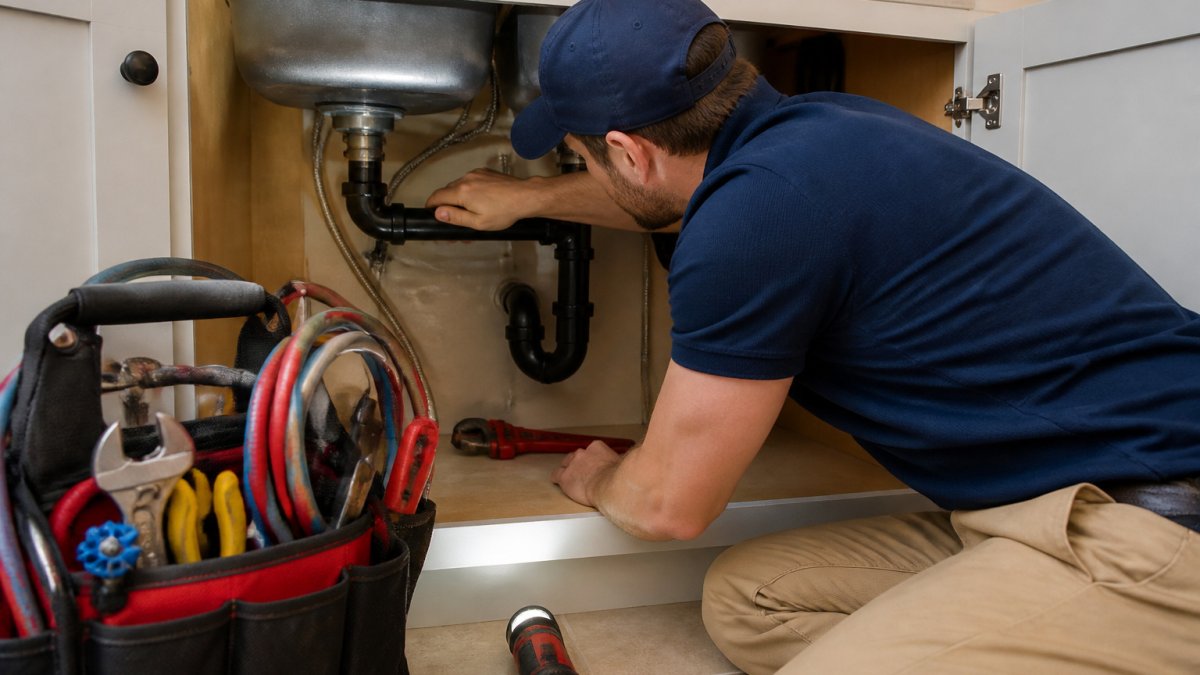
- Look under every sink for moisture, staining, or warped cabinet floors.
- Run each faucet and watch the drain for gurgling or slow drainage.
- Flush each toilet once and listen for a running fill valve after the tank refills.
- Check the base of the water heater for rust or moisture.
- Look at the supply lines behind the washing machine for bulging or cracking.
Do once a year:
- Inspect visible pipes in the basement, crawl space, and attic for corrosion, green staining, or white mineral crust.
- Test every shut-off valve by turning it closed and open again.
- Flush the water heater to clear sediment.
- Check gutters and downspouts so roof runoff discharges away from the foundation.
- Test the sump pump by pouring water into the pit.
Whole-Home Leak Inspection and Water Meter Test
The water meter test is the fastest way to find a hidden leak.
If the indicator moves, the next step is narrowing down the location, meter tests tell you a leak exists, not where.
Watch out: a meter that spins with everything off can mean a slab or foundation leak, and that is not a job for a weekend. Call a licensed plumber before you start opening walls or floors.
Testing Water Pressure and Shut-Off Valves
Water pressure should sit between 40 and 60 psi. A cheap screw-on gauge from any hardware store threads onto a hose bib and reads in seconds.
Shut-off valves deserve the same attention. Angle stops under sinks and toilets seize when they are never turned, and a valve that will not close is useless in an emergency. Exercise each one gently once a year.
Seasonal Plumbing Maintenance Checklist for Denver Homes
Denver's seasonal swings are a common driver of residential plumbing failures, so this seasonal plumbing maintenance checklist follows the local calendar. At roughly 5,280 feet, nighttime radiational cooling can drop temperatures fast even after a mild day, and freeze risk is less about the date than the first hard overnight low.
Use this table as the seasonal backbone, then follow the month-by-month schedule below it.
| Season | Priority Tasks | Why It Matters Locally |
|---|---|---|
| Spring (March-May) | Check gutters and downspouts, inspect the sump pump, test the irrigation shut-off, walk the yard for soggy patches | Snowmelt plus spring storms load the drainage system, and expansive clay soil shifts as it wets |
| Summer (June-August) | Full outdoor spigot check, water pressure test, water heater flush, irrigation backflow check | Peak watering season exposes hose bib leaks and stresses supply lines |
| Fall (September-November) | Disconnect and drain garden hoses, insulate exposed pipes, test the main shut-off, seal foundation cracks | The first hard freeze can split an unprotected line overnight |
| Winter (December-February) | Keep cabinet doors open on exterior walls, watch for frozen pipe symptoms, monitor the water meter, drip vulnerable faucets during deep cold | Sustained freezes stress pipes in crawl spaces, garages, and exterior walls |
Month-by-Month 2026 Schedule
A seasonal table is only useful if it turns into dates. Here is a practical 2026 calendar for a Denver-area home; adjust freeze-related tasks to the forecast.
- January: During any stretch below about 20°F, open cabinet doors under sinks on exterior walls and let a pencil-thin stream drip from the faucet farthest from the main. Recheck the water meter for movement with everything off.
- February: Inspect the water heater base and supply lines in the garage and crawl space for condensation or frost. Test the temperature-pressure relief valve.
- March: As snowmelt begins, walk the perimeter for soggy spots near the foundation and check that downspouts discharge at least a few feet from the wall. Test the sump pump.
Watch out: a frozen pipe should be thawed with a hair dryer or heat lamp, never an open flame, and a burst pipe should have the main shut off before any thawing begins.
Fall tasks matter because a hard freeze on an uninsulated exterior line can cause significant damage.
Water Heater Maintenance Checklist
A water heater maintenance checklist has four core tasks: flush sediment annually, test the temperature-pressure relief valve, check the anode rod every two to three years, and inspect the flue and connections on gas units. Sediment is the biggest killer, insulating the tank bottom and forcing the burner to work harder. Front Range water runs hard enough that scale builds faster than in softer-water regions, so the annual flush matters more here.
The Annual Inspection Sequence
Work through these steps in order, and stop if anything looks unsafe.
- Check the tank base and fittings first. Look for rust, moisture, or crust at the bottom of the tank and at the inlet and outlet connections. Moisture at the base usually signals a failing tank, not a loose fitting.
- Test the temperature-pressure relief valve. Lift the lever and let it snap back, with a bucket under the discharge pipe. Water should flow and then stop. A valve that weeps or will not reseat needs replacement.
- Flush sediment. Connect a hose to the drain valve, run it to a floor drain or outside, and drain until the water runs clear. Do not force a stubborn drain valve; that is a job for a plumber.
- Inspect the anode rod every two to three years. The rod is sacrificial; when it is more than about half consumed, it does little to protect the tank. On many tanks it sits under the top cover, and on some it is not accessible without disconnecting the unit.
- Check the flue and connections on gas units. Confirm the flue is drafting and the connections are tight. At Denver's altitude, gas appliances are adjusted for thinner air, so a unit set up for sea level can run poorly; a licensed technician should confirm the setup.
Hard Water and Altitude Effects in Denver
Hard water effects on plumbing come down to mineral scale: calcium and magnesium settle out and coat the inside of pipes, water heater tanks, and fixture aerators, reducing flow, raising energy use, and shortening appliance life. In a tank water heater, that scale layer produces the popping and rumbling during heating and shortens the tank's life. A water softener or whole-home filtration system addresses the source rather than the symptoms, and
Repair or Replace: Escalation Criteria
The symptoms that say "replace, not repair" are consistent: rusty hot water, popping or rumbling during heating, moisture at the tank base, or a unit past its expected service life.
Safe DIY: the annual flush on a tank with a working drain valve, the relief valve test with a bucket in place, and visual inspection of the base and connections.
When the checklist flags a tank that needs service or replacement, our water heater repair and installation service can take it from there.
Hard Water Effects on Plumbing in the Denver Metro
The visible signs are easy to spot: white crust on faucets, spotty dishes, soap that will not lather, and a showerhead that sprays in odd directions. Behind the wall, the same scale narrows supply lines year after year.
Drain and Sewer Line Checks That Prevent Clogs
Slow drains are a warning, not an inconvenience. A drain that empties a little slower each month is building a blockage, and the fix is far cheaper before it backs up.
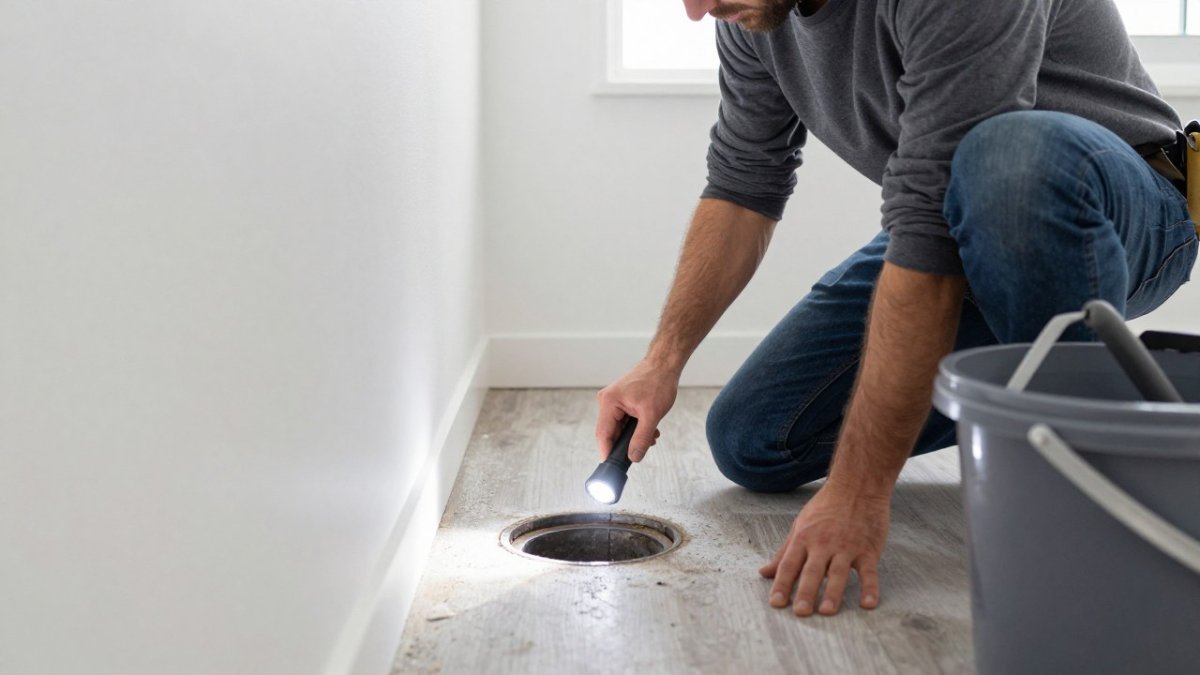
Check these quarterly:
- Run water in every drain in the house, including guest bathrooms and floor drains.
- Watch for gurgling sounds from other fixtures when one drains.
- Smell floor drains and basement sinks for sewer odor.
Sewer warning signs that mean call a plumber: multiple slow drains at once, sewage backup in a tub or shower, gurgling toilets, or a soggy patch in the yard above the sewer line. Plunge Plus technicians are licensed and insured, and can help with clogged and slow drains in the Denver area.
Printable Home Maintenance Checklist and DIY Boundaries
A printable home maintenance checklist works best when it is short enough to actually use. Print this one and keep it on the fridge or in the garage:
- Monthly: under-sink moisture check
- Monthly: run every faucet and flush every toilet
- Monthly: water heater base inspection
Safe DIY: visual inspections, pressure gauge readings, meter tests, aerator cleaning, and flushing the water heater on a tank with a working drain valve.
Call a licensed plumber: anything inside a wall or slab, gas line work, sewer line problems, a water heater that will not drain or shows tank corrosion, and any valve that will not close.
Do not open a wall or dig up a floor to chase a leak without a professional diagnosis first. The U.S. Environmental Protection Agency's WaterSense program notes that household leaks waste significant water annually, which is another reason to fix a confirmed leak promptly rather than let it run. For guidance on protecting your home from water damage generally, the Insurance Institute for Business & Home Safety publishes homeowner resources worth reviewing.
Request Service Online for Your Denver Plumbing Maintenance
A checklist prevents problems. It does not fix the ones already in your walls.
Plunge Plus is locally owned and operated, our technicians are licensed and insured, and we offer transparent pricing. For current prices or a quote, see the Plunge Plus pricing page.
Request service online through our emergency plumbing services page for help with leaks, clogs, and water heater failures.
Frequently Asked Questions
How often should you inspect your home's plumbing?
Walk through the main plumbing maintenance tasks once a month: check under sinks for moisture, look at exposed pipes in the basement and attic, and test the water pressure. Do a deeper annual inspection that includes flushing the water heater, testing shut-off valves, and checking washing machine hoses. In Denver, add a spring and fall seasonal pass so freeze risk and hard water buildup get caught early.
What belongs on a seasonal plumbing maintenance checklist?
Spring: inspect gutters and downspouts, check for winter damage to exposed pipes, and test outdoor faucets. Summer: watch water usage and check for slow drains. Fall: disconnect hoses, insulate exposed pipes, and flush the water heater before heating season. Winter: keep cabinet doors open on exterior walls and know where your main shut-off valve is. A seasonal plumbing maintenance checklist keeps these tasks on a schedule instead of an emergency.
How does hard water affect residential plumbing?
Hard water leaves mineral scale inside pipes, water heaters, and fixtures. That buildup narrows flow, shortens water heater life, and dulls faucet performance. You may notice white crust on fixtures, spots on dishes, or rising energy bills. A water softener or regular descaling helps, and an annual inspection catches scale before it turns into a repair.
How often should a water heater be maintained?
Flush the tank once a year to remove sediment, and test the temperature and pressure relief valve at the same time. Check the anode rod every two to three years and replace it when it is heavily corroded. Annual service is the cheapest way to avoid a mid-winter failure, and it is the core of any water heater maintenance checklist.
How can you tell if a plumbing leak is hidden?
Watch your water meter with every fixture turned off. If the dial still moves, water is escaping somewhere. Other signs include a sudden jump in the water bill, musty smells, warm spots on the floor, or cracked paint. Hidden leaks in slabs and walls are best confirmed by a licensed technician using leak detection equipment.
When should you call a plumber for routine maintenance?
Call when a task goes beyond surface checks: recurring slow drains, low pressure throughout the house, a water heater that will not hold temperature, corroded supply lines, or any leak you cannot see. Licensed and insured technicians can inspect, diagnose, and fix the issue in one visit, which is cheaper than waiting for water damage.
Your plumbing will not announce a failing shut-off valve or a slab leak in advance. It gives you clues, and the checklist above is how you read them. If something on your list needs a professional eye, get it looked at now rather than after the water damage. Get started with Plunge Plus and keep your home's plumbing running smoothly.

