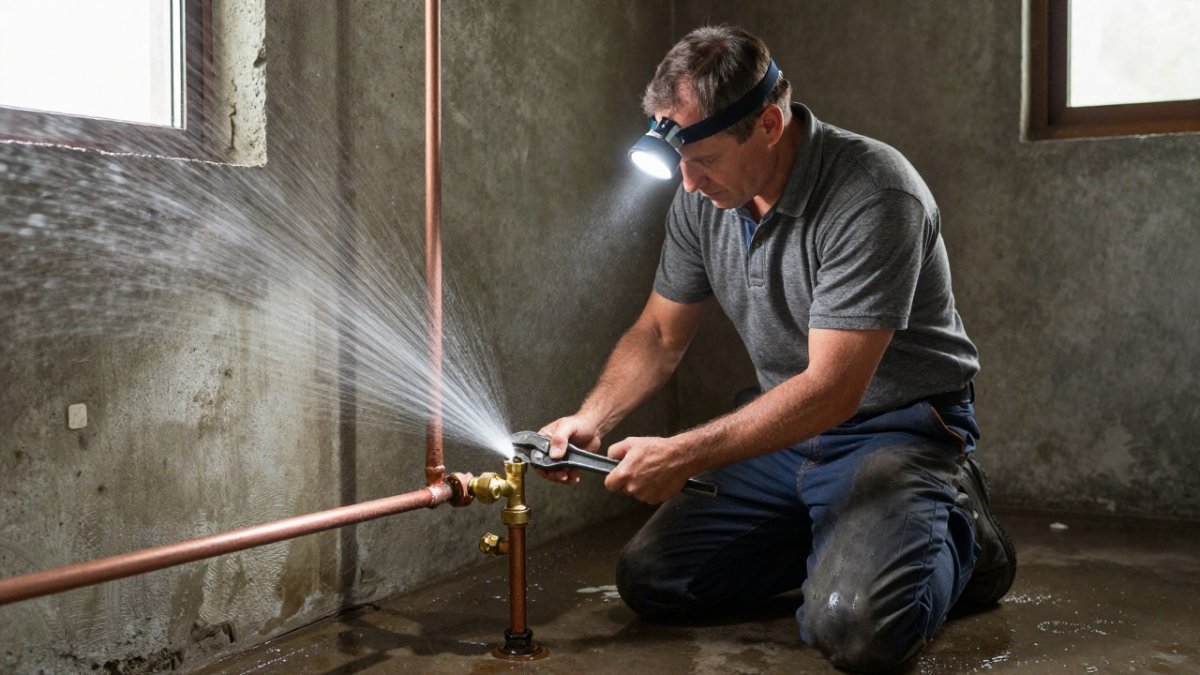
What to Do When a Pipe Bursts in Your House
Last Updated: November 21, 2026
Quick Summary
When a pipe burst happens in your house, shut off the main water supply first, then drain the remaining water and cut power to any wet areas. Document the damage with photos before cleaning, and call a licensed plumber for the repair.
- Find and turn off the main shutoff valve before doing anything else.
- Open faucets on the highest and lowest floors to drain remaining water.
- Shut off power at the breaker panel if water has reached outlets or wiring.
- Photograph all damage before moving anything, and start your insurance claim the same day.
- Call a mitigation company if water has soaked into drywall, subfloors, or insulation.
Table of Contents
- Shut Off the Main Water Supply Right Away
- Drain the Pipes and Cut Power to Wet Areas
- How to Tell If a Pipe Burst in the Wall
- Document the Damage and Start Cleanup Safely
- Does Homeowners Insurance Cover a Burst Pipe?
- What a Pipe Burst in the House Typically Costs
- Booking a Licensed Plumber for Your Burst Pipe Repair
- Frequently Asked Questions
Shut Off the Main Water Supply Right Away
When a pipe bursts in your house, the first thing to do is stop the water. Water can spill out at several gallons per minute, so every minute counts. Find your main shutoff valve and turn it off before you do anything else. In most Denver homes, the main valve sits where the water line enters the house, often in a basement, crawl space, utility closet, or near the front of the home.
Turn the valve clockwise until it stops. A gate valve may take several turns, while a newer ball valve usually needs only a quarter turn. If the valve is hard to move, use a steady hand rather than forcing it, since force can snap an old valve stem.
Watch out: Do not wait to see how bad the leak is. Shut the water off first, then assess the damage.
Using a Local Shutoff Valve
Many homes also have shutoff valves at fixtures like toilets, sinks, and water heaters. If the burst is limited to one fixture or room, closing its local valve may stop the leak without cutting water to the whole house. Still, local valves are often older and can seize up, so check the main valve as well.
A local valve is useful for a burst line under a sink or behind a toilet. If the leak is in a wall or ceiling, go straight to the main valve.
Finding Your Main Shutoff If It Is Stuck
Sometimes the main valve is corroded, painted over, or hard to reach. Try these steps:
- Wear gloves and use a water-safe penetrating lubricant on the valve stem.
- Use an adjustable wrench for use, pushing gently rather than yanking.
- Check the water meter, since many Denver homes have a shutoff near it, usually in a meter box in the yard.
- Contact your water utility if you cannot close the main valve. Some utilities can shut off service at the curb.
If the valve will not budge and water keeps flowing, leave the house if the flooding is serious and call a licensed plumber right away.
Drain the Pipes and Cut Power to Wet Areas
Once the water is off, drain the remaining water from the system. Open the faucets on the highest and lowest floors, and flush toilets to empty the tanks. This lowers water pressure and reduces how much water can leak after the shutoff.
Electricity and water are a dangerous mix. If water has reached outlets, wires, or appliances, shut off power at the breaker panel for the affected area. Do not walk through standing water to reach the panel. If the panel itself is wet, stay out and call an electrician or your utility company.
Unplug electronics and move cords out of the water. Never touch a light fixture or outlet while your feet are wet.
How to Tell If a Pipe Burst in the Wall
A burst inside a wall can hide for days. Look for these warning signs:
- A sudden drop in water pressure at taps
- The sound of running water when no fixture is on
- A damp spot, bubbling paint, or peeling wallpaper
- A musty smell or unexplained mildew
- A water bill that jumps without a clear reason
- A warm or soft area on the floor above the leak
If you suspect a hidden leak, check your water meter. Turn off every fixture and water-using appliance, then watch the meter. If the dial still moves, water is escaping somewhere. Call a plumber who can find it with leak detection tools rather than opening walls blindly.
Document the Damage and Start Cleanup Safely
Before you move anything, take photos and video of the damage. Capture the burst pipe if you can see it, the wet walls, the flooded floors, and any ruined belongings. A homeowner in a wet basement should photograph water-stained drywall and standing water with the wet/dry vacuum nearby, showing the scale of the problem.
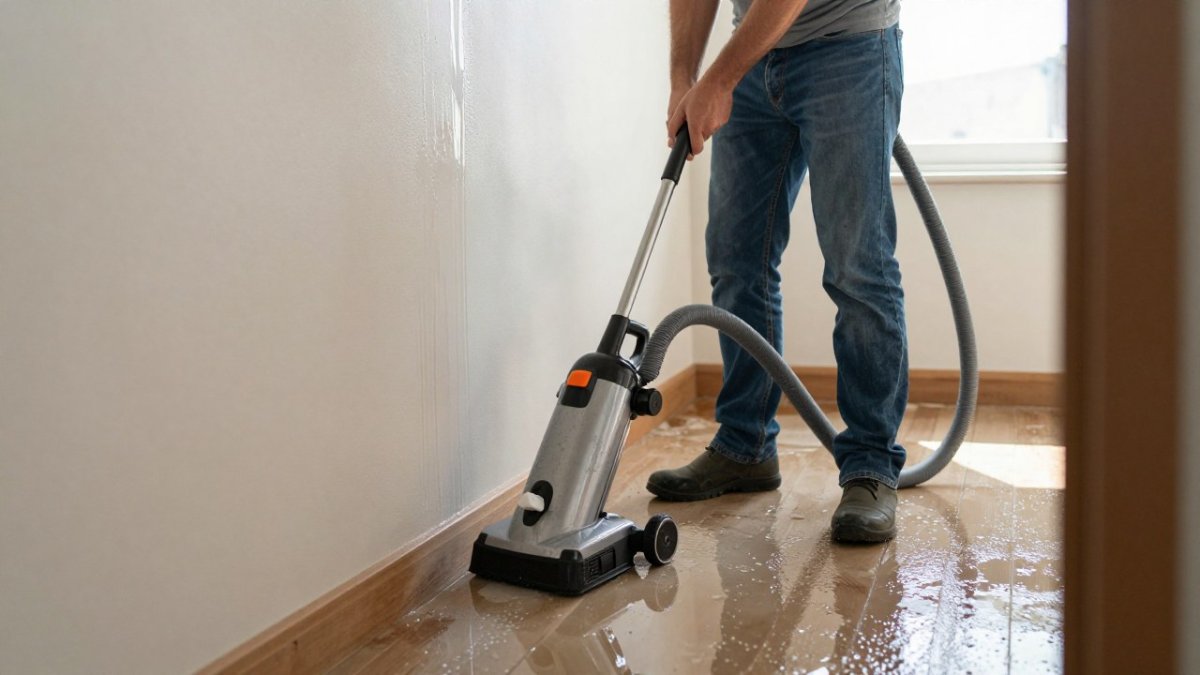
Then start drying the area. Remove standing water with a wet/dry vacuum, mop up what remains, and move furniture and rugs onto dry surfaces. Open windows and run fans to improve air circulation. A dehumidifier helps pull moisture out of the air and reduces the risk of mold.
Cleanup is not always a do-it-yourself job. Call a professional water mitigation company if water has soaked into drywall, subfloors, or insulation, or if the flooding covers a large area. Mold can start within 24 to 48 hours in damp conditions, so act quickly (the EPA).
Does Homeowners Insurance Cover a Burst Pipe?
Most standard homeowners insurance policies in the United States cover sudden and accidental water damage from a burst pipe, including the cost to repair or replace damaged drywall, flooring, cabinetry, and some personal belongings. The pipe itself is usually not covered, and the cause of the loss matters enormously.
Start the claim the same day. Call your insurer's claims line, not just your local agent, and ask for a claim number before you hang up.
Document before you clean. Take wide photos of each affected room showing the standing water and the damaged materials, then close-ups of the burst pipe, water-stained drywall, warped flooring, and ruined furniture. Shoot a short video walking through the damage and narrating what you see.
Ask three questions when you report the loss: What is my deductible, and does it apply separately to the structure and contents? Does my policy cover mold remediation, and is there a sublimit? Will you pay for emergency water extraction and drying, or do I need to use a preferred vendor? The answers vary widely by policy, so get them in writing or note the representative's name and the time of the call.
A common pattern is for the insurer to send an adjuster within a few business days. In the meantime, you are usually expected to take reasonable steps to prevent further damage, such as shutting off the water, extracting standing water, and running fans or a dehumidifier.
Watch out: Do not sign a repair contract or authorize major work before the adjuster inspects the damage unless emergency repairs are needed to make the home safe. Insurers can dispute work that was completed before they had a chance to evaluate the loss.
Coverage details vary widely by carrier and policy form, so read your declarations page and ask your agent to explain how your policy applies to a burst pipe. Do not assume a burst pipe is automatically covered, and do not assume a denial is final.
What a Pipe Burst in the House Typically Costs
The total cost of a burst pipe depends on four things: where the pipe is, what it is made of, how much water escaped before the shutoff, and how much of the surrounding structure has to be opened up. A burst on an exposed copper line in a basement is a very different job from a burst inside a finished wall or under a slab. Because those variables swing so widely, no honest plumber can quote a firm price over the phone without seeing the break, but you can understand the cost drivers before you call.
The repair itself is usually the smaller part of the bill. An exposed pipe repair is typically a straightforward plumbing job: cut out the damaged section, solder or press in a new piece, and test it.
Water damage cleanup is often the largest line item. Extraction, drying, and dehumidification are billed by the affected area and by how many days the equipment runs. If drywall, insulation, or subfloor has soaked through, those materials have to be removed and replaced, and that is a carpentry and drywall job on top of the mitigation.
Ask any plumber or mitigation company for a written estimate that separates the repair from the cleanup, and ask whether the price is a flat rate or an hourly rate plus materials. Ask about after-hours and emergency fees, since burst pipes often happen at night or on weekends.
Response time matters more than a low headline price. A company that answers the phone at 2 a.m. and can be at the door within a reasonable window will usually save you more in water damage than a cheaper company that arrives the next afternoon.
For current pricing and service options, visit the Plunge Plus pricing page or request an estimate directly from the team.
The cost of a burst pipe depends on where the break is, the pipe material, how much water escaped, and how much structure must be opened.
| Cost driver | Effect on price | Note |
|---|---|---|
| Pipe location | Exposed pipe is simplest | Inside walls or under slabs adds labor |
| Wall or ceiling access | Drywall removal and patching | Pushes repair into a larger project |
| Pipe material | Copper, PEX, galvanized differ | Old galvanized can be brittle |
| Water damage cleanup | Often the largest line item | Billed by area and equipment days |
| Drywall, insulation, subfloor | Removal and replacement | Carpentry work on top of mitigation |
| Mold remediation | Separate specialty service | Requires its own containment scope |
| After-hours fees | Emergency calls cost more | Ask for the rate upfront |
Booking a Licensed Plumber for Your Burst Pipe Repair
A burst pipe is an emergency, and the right plumber makes a real difference. Look for a licensed and insured technician who can explain the problem clearly and give you options before starting work. Ask whether the price is quoted upfront, and whether any after-hours or emergency fees apply.
At Plunge Plus, we treat every emergency as a priority and aim to fix it right the first time. Our licensed and insured technicians serve homeowners across Denver and surrounding areas. For a burst pipe, our water line services team can assess the break and make the repair. Our plumbing repairs cover general fixes once the emergency is under control. If you need help right away, our emergency plumbing services provide fast response for leaks and water damage.
Call Plunge Plus at (720) 434-5832 or request service online to get started.
Frequently Asked Questions
Does homeowners insurance cover a burst pipe?
Many homeowners policies cover sudden, accidental water damage from a burst pipe, including damage to walls, floors and belongings. Coverage for the pipe itself is often excluded, and damage from long-term leaks or neglect may be denied. Check your policy for water damage terms, file a claim promptly, and keep photos, video and repair receipts. Your insurer or a licensed Denver plumber can help you document the cause of the break.
How do you shut off the water when a pipe bursts?
Find your main water shutoff valve, usually near the water meter, in a basement, crawlspace or garage, and turn it clockwise until it stops. If you have a local shutoff valve at a fixture, close that first to limit flooding. Then open a faucet to release pressure and drain the line. If the valve is seized or leaking, call a licensed plumber to replace it before the water supply is needed again.
How can you tell if a pipe burst in the wall?
Common signs include a sudden drop in water pressure, a water meter that keeps moving when all fixtures are off, a damp or bubbling wall or ceiling, a musty smell, and warm or discolored drywall. Cracks in plaster or a sagging floor can also point to hidden water. If you suspect a leak inside a wall, shut off the main supply and call a plumber who can locate it with a moisture meter or camera.
When should you call an emergency plumber for a burst pipe?
Call an emergency plumber as soon as you have shut off the main water and the burst is not something you can safely isolate. Standing water near outlets or appliances, a burst inside a wall, a pipe that has frozen and split, or water reaching a ceiling light all warrant immediate professional help. Ask about trip fees and after-hours charges before work begins so you know what to expect.

