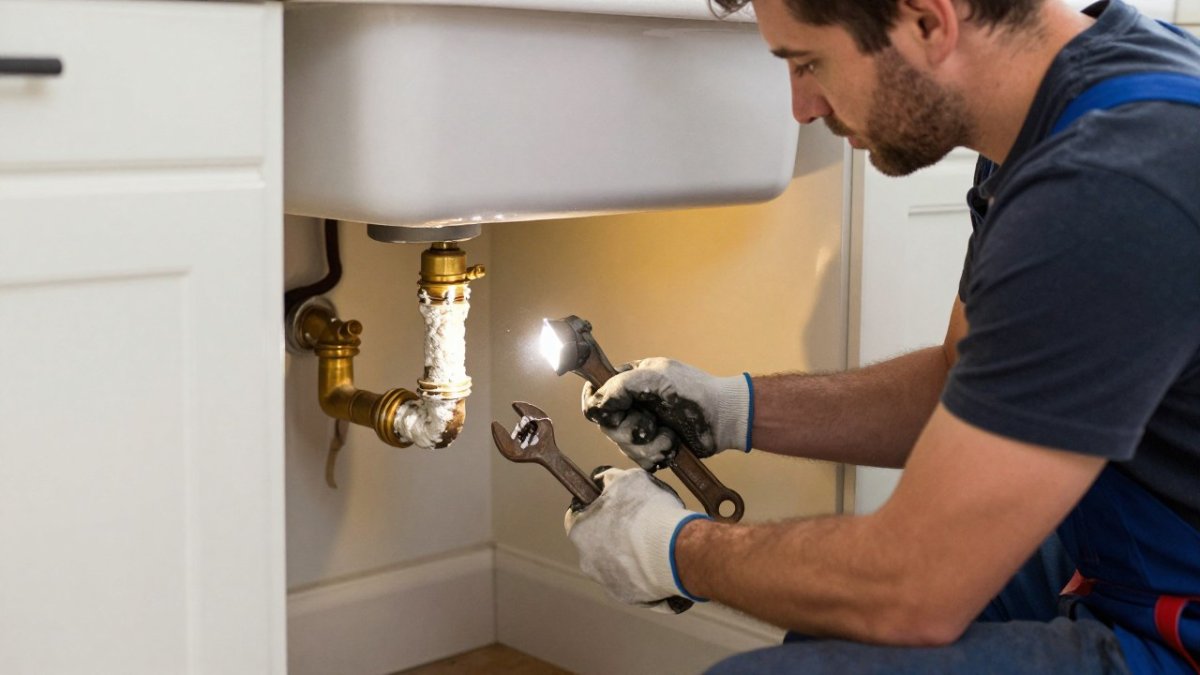
Hard Water Effects on Plumbing: Denver Homeowner Guide
Last Updated: November 17, 2026
Quick Summary
Hard water effects on plumbing come from calcium and magnesium leaving mineral scale inside pipes, which builds in layers and slowly narrows the pipe's internal diameter. That buildup reduces flow and water pressure, especially at hot taps, and forces water heaters and appliances to work harder. Damage is cumulative and quiet, so pressure drops usually appear long after scale has been forming.
- Scale forms fastest in hot water lines, so water heaters and hot-side piping show deposits first.
- Warning signs include white crust on faucets, falling hot-tap pressure, and clogs that recur in the same line.
- One grain per gallon equals about 17.1 ppm, and readings above 180 ppm make scale accumulation likely.
- A reading under about 60 ppm rarely justifies a softener for plumbing protection alone.
- Ion-exchange softeners stop new scale but do not dissolve scale already inside the system.
Table of Contents
- What Hard Water Is and Why Denver Homes Are at Risk
- How Calcium and Magnesium Create Mineral Scale Inside Pipes
- Signs of Hard Water Damage: Reduced Flow, Low Pressure, and Clogs
- Hard Water Effects on Plumbing Washing Machine and Other Appliances
- How Long Does It Take for Hard Water to Damage Pipes?
- How to Remove Hard Water Buildup in Pipes
- Hard Water Effects on Plumbing Water Softener Systems
- When to Call a Plumber for Hard Water Damage in Denver
- Frequently Asked Questions
What Hard Water Is and Why Denver Homes Are at Risk
Hard water is water that carries high amounts of dissolved calcium and magnesium, and it is not a health risk even though the minerals leave deposits behind (Drinking Water: Hard Water). The University of Nebraska-Lincoln Extension's hard water guide puts it plainly: these minerals are a household nuisance, not a hazard. That distinction matters, because the damage hard water causes is rarely health-related. It is mechanical.
Water can pick up minerals as it moves through soil and rock, which often makes it harder. Water hardness can vary depending on your supplier and your neighborhood.
Homeowners often blame fixtures or appliances for failures that trace back to mineral buildup inside the pipes feeding them. Below, we break down what hard water does to a plumbing system, how to spot it early, and what actually removes it.
How Calcium and Magnesium Create Mineral Scale Inside Pipes
Mineral scale is the crusty deposit left behind when dissolved calcium and magnesium come out of solution and stick to surfaces. Heat and pressure changes accelerate the process. Water sitting in a hot water line deposits minerals faster than cold water does, which is why water heaters and hot-side piping tend to show scale first.
The chemistry matters less than the consequence. Once scale forms on the inside wall of a pipe, it does not wash away. It builds in layers, narrowing the pipe's internal diameter a little at a time. A half-inch line that loses even a small fraction of its bore moves noticeably less water.
Research from the Center for Plumbing Safety at Purdue University points to mineral deposition and related pipe degradation as factors that can contribute to plumbing problems and failures over time. That is the mechanism: not a dramatic break, but a slow narrowing and a slow weakening.
Signs of Hard Water Damage: Reduced Flow, Low Pressure, and Clogs
Watch for these warning signs, in roughly the order they tend to appear:
- White crust on faucets and showerheads. Scale builds at the aerator and the nozzles first.
- Falling water pressure, especially at hot taps.
- Slow drains that return after snaking.
- Spotted glassware and fixtures after washing.
- A water heater that recovers more slowly than it used to.
- Clogs that recur in the same line, suggesting restricted diameter rather than a single blockage.
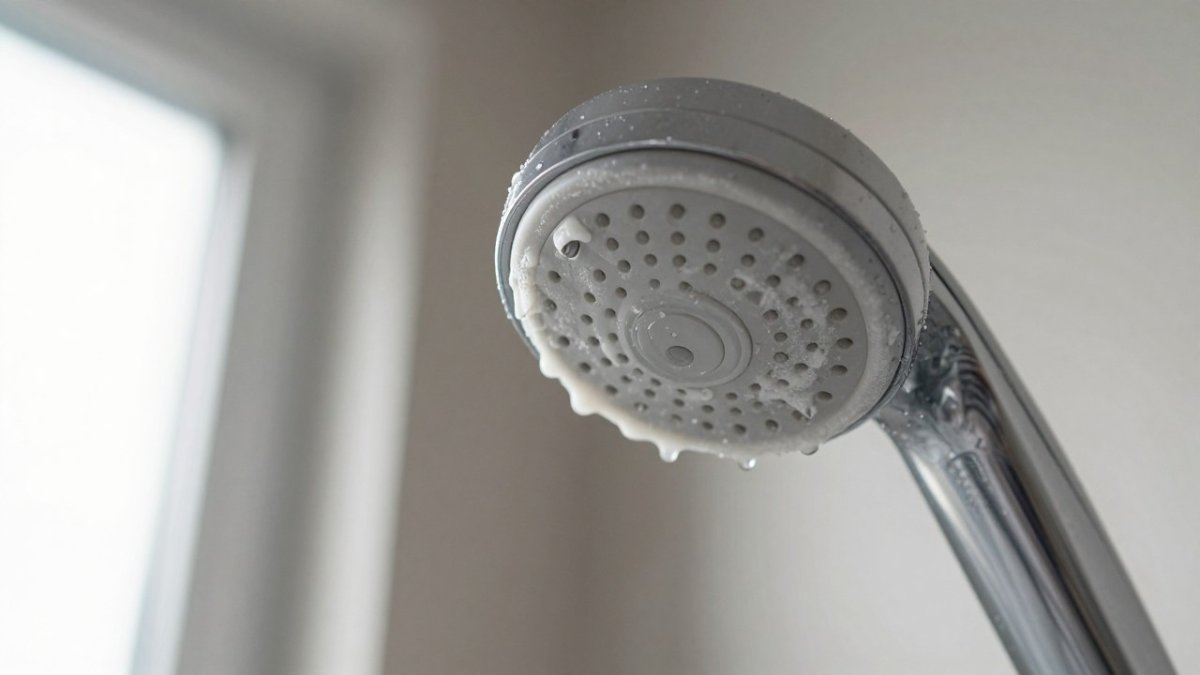
Reduced flow is the tell. A single clogged fixture is a fixture problem. Low pressure across the whole house, or clogs that keep coming back in the same drain, points to scale inside the pipe. If you are already dealing with slow drains, our guide on how to fix slow drains walks through the steps worth trying before you call anyone.
Hard Water Effects on Plumbing Washing Machine and Other Appliances
Appliances that heat or move water take the hardest hit. A washing machine with scaled internal passages works against restricted flow, and its heating element collects deposits that reduce efficiency. Dishwashers, coffee makers, and ice makers show the same pattern on a smaller scale.
The water heater is the expensive one. Scale accumulates on the tank bottom and on the heating element, forcing the unit to run longer to deliver the same hot water. That shortened recovery time is usually the first sign a heater is scaling up, and it is the reason some heaters fail years earlier than they should.
Watch out: ignoring a water heater that keeps failing is the most expensive habit we see. Replacing a heater without addressing the scale feeding it just resets the clock.
How Long Does It Take for Hard Water to Damage Pipes?
There is no single timeline. Scale accumulates over time, and how fast depends on your water's hardness, how much water moves through the pipe, and whether the line runs hot. A hot water line in a hard-water home can show measurable restriction in a few years. A cold line in a softer part of the metro may go a decade with little effect.
What we can say with confidence: damage is cumulative and quiet. By the time pressure drops are obvious, the scale has been building for a long while. If you suspect the buildup is already advanced, our team handles piping and repiping for homes where cleaning alone will not restore flow.
How to Remove Hard Water Buildup in Pipes
Before you remove anything, measure what you are dealing with. Hardness is reported in two units that describe the same thing: grains per gallon (gpg) and milligrams per liter, which is the same as parts per million (ppm). One grain per gallon equals about 17.1 ppm.
You have three practical ways to test:
- Municipal water quality report. Many water utilities publish annual water quality reports that include hardness ranges. This tells you the source water, not what arrives at your fixture after sitting in a service line.
- DIY test strips. Inexpensive strips give a rough gpg reading in seconds. They are good for a yes-or-no answer but drift at higher hardness levels.
- Laboratory or plumber-administered test. A drop-count kit or a lab sample gives a precise ppm figure you can act on. Ask for both calcium hardness and total hardness, since the two are not identical.
Interpret the result before you buy anything. A reading under about 60 ppm rarely justifies a softener for plumbing protection alone. A reading above 180 ppm makes scale accumulation likely on hot-water lines and heating elements, and prevention becomes the cheaper path.
Removal itself depends on how far the scale has progressed. For fixtures, soaking aerators and showerheads in white vinegar dissolves the crust. For water heaters, flushing the tank removes loose sediment from the bottom. For the pipes themselves, options range from flushing and descaling to, in severe cases, replacing the affected section.
Watch out: a hardness test tells you the water's mineral load, not whether a specific pipe is scaled. Low pressure at one fixture, corrosion at joints, or a failing pressure regulator can mimic hard-water symptoms, so confirm the cause before descaling a line that does not need it.
Three things to know before you start:
- Vinegar soaks work on removable parts, not on pipes inside walls.
- Chemical descalers need to match your pipe material; the wrong one causes more harm than the scale.
- Repeated clogging in one line is a diagnosis problem, not a cleaning problem.
The practical move is to test your water first, write down the number and the unit, and use it to decide whether prevention is worth the investment or whether you are chasing a problem you do not have.
Here are the hardness readings and what each one means for your plumbing.
| Reading | Unit | What it means |
|---|---|---|
| Under about 60 | ppm | Rarely justifies a softener for plumbing protection alone |
| Above 180 | ppm | Scale accumulation likely on hot-water lines and heating elements |
| 17.1 | ppm | Equals one grain per gallon (gpg) |
Hard Water Effects on Plumbing Water Softener Systems
Treatment is where most hard-water advice stops at "install a softener." That is one option, not the only one, and the choices differ in what they actually do to your plumbing.
Ion-exchange softeners remove calcium and magnesium by swapping them for sodium or potassium on a resin bed.
Salt-free conditioners change how minerals behave rather than removing them. They can reduce the way scale sticks to surfaces, but they do not lower the measured hardness, so a test after installation will still read hard.
Filtration targets taste, odor, chlorine, and sediment. A standard carbon filter does little for calcium and magnesium, so it is not a hardness treatment on its own. It is often paired with softening rather than used instead of it.
Descaling is a maintenance action, not a treatment system. Flushing a tankless water heater or soaking fixtures removes existing deposits but does nothing to prevent the next layer.
The sequence that most practitioners recommend is clean first, then prevent. Flush or descale what is already scaled, confirm the hardness reading, and then choose a treatment matched to that number.
Watch out: oversizing a softener or skipping the hardness test leads to salt waste and unnecessary maintenance. Match the system to your measured grains per gallon and your household's water use, not to a sales pitch.
You can see the water treatment options we install for Denver homes, including softeners and filtration, and compare what fits your situation.
When to Call a Plumber for Hard Water Damage in Denver
Call a licensed plumber when pressure loss is house-wide, when the same drain clogs repeatedly, when you see corrosion or leaks at joints, or when a water heater is failing early and repeatedly. Those are signs the problem is inside the piping, not at the fixture.
We know the billing worry. Plunge Plus offers transparent pricing, and our technicians are licensed and insured. If you want to understand what drives repair costs first, read our guide on avoiding surprise plumbing repair bills. When you are ready, request plumbing repairs and we will diagnose the line rather than just clear it.
Hard water will not damage your health, but it will quietly narrow your pipes and shorten the life of your water heater. The fix starts with knowing your water's hardness and acting before the scale is structural. Plunge Plus is locally owned, licensed and insured, and has served the Denver area since 2009 with transparent pricing and technicians who treat your home with care. Get started with Plunge Plus and stop guessing what is restricting your water flow.
Frequently Asked Questions
Does hard water cause plumbing problems?
Hard water itself is not a health risk, but the dissolved calcium and magnesium it carries can form scale inside pipes, fixtures, and appliances. Over time, this mineral buildup restricts water flow, lowers pressure, and can contribute to clogs. Hard water is generally considered a nuisance rather than a health hazard, but that nuisance can shorten the life of water heaters and washing machines. In Denver, where water hardness varies by neighborhood, the effects depend on your specific water supply and how long scale has been accumulating.
How long does it take for hard water to damage pipes?
There is no single timeline because it depends on your water's hardness level, pipe material, water temperature, and daily usage. Scale accumulates gradually, so noticeable flow restriction or appliance failure often takes years to develop. The best way to know your risk is to test your water and inspect for early signs like white crust on faucets or reduced shower pressure.
Can hard water damage a washing machine?
Yes, hard water effects on plumbing washing machine performance are well documented. Calcium and magnesium deposits build up on heating elements and inside drums, which can reduce efficiency and lead to early appliance failure. The minerals also interfere with detergent, so clothes may not get as clean. If you notice stiff fabrics, white residue on dark clothes, or the machine taking longer to fill, scale may be the cause. A water softener or periodic descaling can help extend the machine's life.
Will a water softener help prevent plumbing damage from hard water?
A water softener removes calcium and magnesium before water enters your pipes, which prevents new scale from forming. It does not dissolve existing scale, so older buildup may need mechanical or chemical removal first. Softeners are generally effective at reducing mineral-related nuisance. For Denver homes, the right choice depends on your water hardness, pipe material, and budget. A licensed plumber can test your water and recommend whether a softener, filtration system, or targeted descaling is the best fit.

