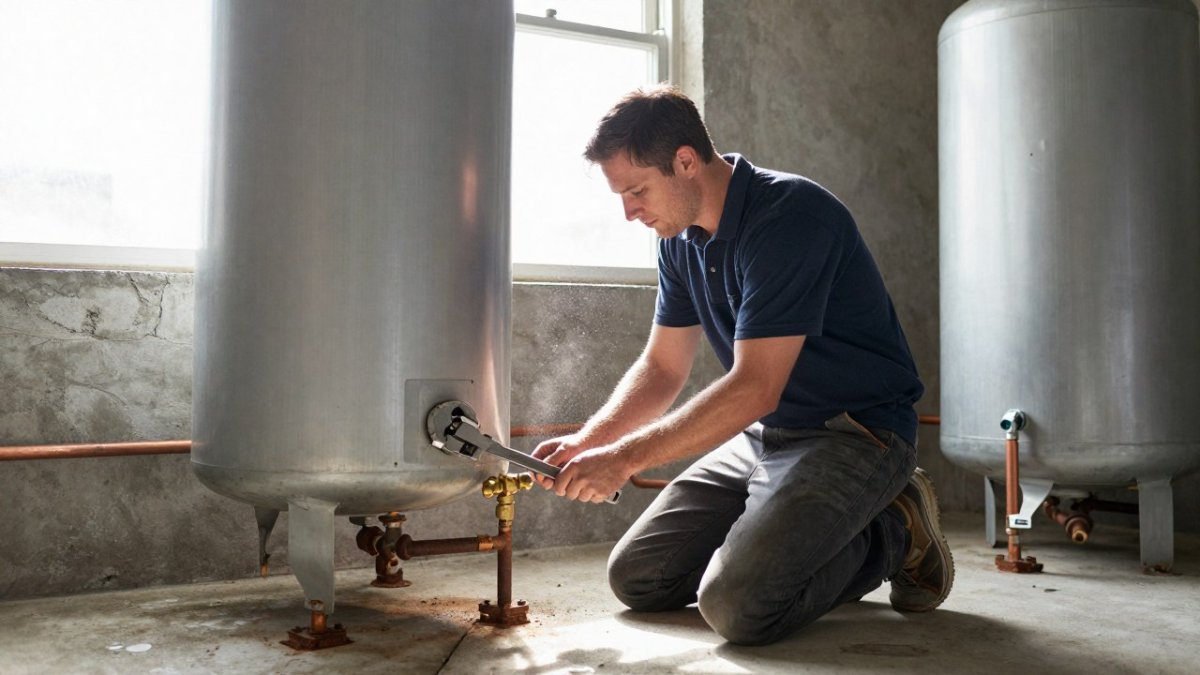
Why Water Heaters Fail in Denver and How to Prevent It
Quick Summary
Water heaters fail in Denver mainly from tank leaks and burst tanks, valve malfunctions, and aging supply lines. Cold groundwater and high altitude add stress, and hard water builds sediment that shortens equipment life.
- Leaks and burst tanks are among the most common causes of water heater failure.
- Denver's cold incoming groundwater forces the burner to run longer, accelerating wear.
- Sediment from hard water insulates the heater and can cause popping or rumbling noises.
- Flush the tank once a year to clear loose sediment before it hardens.
- Set the thermostat to 120°F, and do not cap a dripping pressure relief valve.
Table of Contents
- What Usually Causes a Water Heater to Fail
- How Denver's Cold Groundwater and Altitude Affect Your Water Heater
- Why Your Water Heater Is Not Keeping Up in Winter
- Hard Water, Sediment Buildup, and How to Flush a Water Heater
- Signs a Water Heater Needs Repair Before It Fails
- How Long Water Heaters Last in Colorado and When to Replace Yours
- Scheduling Your Denver Water Heater Maintenance Next
- Frequently Asked Questions
What Usually Causes a Water Heater to Fail
Most water heaters in Denver don't fail out of nowhere. Leaks in the heater itself and burst tanks are among the most common causes of water heater failure, so the tank is often the weak point.
Valve malfunctions and supply-line problems are other common causes of failure.
Leaks and burst tanks
A tank leak usually starts small. Corrosion or sediment wears through the inner lining over time, and water seeps out before anyone notices a problem. A burst tank is the worst version of this, because the stored water releases all at once.
Watch for a damp floor around the base, rust-colored stains, or a metallic smell near the unit. Any of these means the tank may already be failing.
Valve and supply-line failures
The pressure relief valve and the cold-water inlet valve control how water enters and exits the tank. When they stick or wear out, the heater can leak, or pressure can build to unsafe levels.
Supply lines, the flexible hoses that feed the heater, also fail with age. A cracked or loose connection can spray water across the floor. Check these lines during routine inspections.
Shares of analyzed water heater failure causes (2026)
How Denver's Cold Groundwater and Altitude Affect Your Water Heater
Denver's elevation and cold incoming water both affect how water heaters operate. Both factors shorten equipment life and change the symptoms a failing unit shows. Understanding them helps you tell a normal Denver performance quirk from a real failure.
Cold groundwater and recovery time
Denver's incoming water runs cold, especially in winter. Incoming groundwater can run quite cold in winter. A tank water heater is rated by its recovery rate, how many gallons it can raise by a set temperature in an hour.
A common pattern in Denver homes is hot water that keeps up in summer but runs short in January. That is usually cold groundwater plus higher winter demand, not a failed heater.
Altitude and gas combustion
Denver sits about 5,280 feet above sea level.
More important than capacity loss is combustion quality. A burner set up for sea-level air will run rich at altitude, too much gas for the available oxygen.
Watch out: A yellow flame, soot streaks around the burner access panel, or a stale or sharp smell near the unit can mean incomplete combustion.
Venting at altitude
Altitude also affects venting. Atmospheric-vent water heaters rely on a natural draft up the flue, and the thinner air at 5,280 feet carries less draft pressure. A flue that is marginal at sea level, long horizontal runs, too many elbows, or a shared vent, can spill combustion gases into the room in Denver. If you smell exhaust or see moisture on the windows near the heater, have the venting inspected.
What this means for diagnosis
Use the altitude and groundwater factors to sort symptoms:
- Hot water runs short only in winter, flame is blue, no soot: likely cold groundwater and demand, check thermostat setting, fixtures, and tank size before calling for repair.
- Hot water runs short year-round, popping or rumbling: likely sediment, see the flushing section below.
- Yellow flame, soot, or exhaust smell: altitude-related combustion problem, stop use and call a licensed technician.
A licensed plumber can measure the gas pressure at the manifold and confirm whether the unit is set up for Denver's elevation. That check is not a homeowner task because it involves gas supply and combustion testing.
Why Your Water Heater Is Not Keeping Up in Winter
If your hot water runs out faster in January than in July, the heater is likely struggling with cold incoming water.
Higher household demand makes it worse. Long showers, laundry days, and guests all draw more hot water at once.
Some quick checks help. Make sure the thermostat is set to 120°F, which is hot enough for most uses and reduces scalding risk.
Hard Water, Sediment Buildup, and How to Flush a Water Heater
Hard water is a common cause of sediment buildup in water heater tanks. You can check your own water's hardness with a home test kit or by reviewing your local water quality report.
How sediment forms and why it matters
When hard water is heated, dissolved calcium and magnesium come out of solution and settle as scale. In a tank water heater, that scale collects on the bottom of the tank and on the heating element or burner plate.
Symptoms that point to sediment rather than a failed part:
- Popping, rumbling, or crackling from the tank as it heats
- Hot water that runs short even when the tank is the right size
- A burner or element that runs noticeably longer than it used to
- Rusty or gritty water when you drain a little from the drain valve
If the noise and short hot water come with a leaking tank, rusty water at every tap, or a pressure relief valve that drips, stop, those point to tank failure or a pressure problem, not sediment, and flushing will not fix them.
Safe homeowner checks versus professional work
Flushing a tank is a reasonable homeowner task on a maintained unit, but several conditions make it unsafe or ineffective:
- Stuck or leaking drain valve: do not force it. A snapped valve means a full-tank drain and a plumber.
- Rusty, gritty, or hot water at the drain: stop and call a professional; the tank may already be failing.
- Gas unit with a pilot or burner that will not relight after flushing: do not keep trying. Call a licensed technician.
- Any sign of a gas smell or exhaust spillage: leave the area, shut off the gas if safe, and call for service.
A licensed plumber can also check the anode rod while the tank is drained. The anode rod is a sacrificial metal rod that corrodes instead of the tank lining. An anode rod may need replacement every few years, and once it is consumed the tank can begin to corrode. That check is worth doing at the same visit as a flush.
How to flush a tank water heater
Flushing once a year clears loose sediment before it hardens. The basic process:
- Turn off the power at the breaker or set the gas valve to pilot (or off, per the label).
- Shut off the cold-water inlet valve.
- Attach a garden hose to the drain valve and run it to a floor drain or outside.
- Open the drain valve and the nearest hot-water faucet to let air in.
Watch out: Never drain or flush a tank while the power or gas is on and the tank is empty, dry-firing a heating element or burner can destroy the unit and create a fire hazard. Refill the tank completely and confirm water runs from a hot tap before you restore power.
When to skip the DIY flush
If the heater is more than 10 years old, has never been flushed, or already shows rust or a leaking drain valve, a DIY flush can loosen sediment that was plugging a pinhole and turn a slow seep into a leak. In those cases, have a licensed plumber inspect the tank first and decide whether flushing, anode replacement, or replacement is the better move. A practical maintenance schedule includes an annual flush and a professional inspection of the burner, venting, and pressure relief valve before winter.
The table below sums up the sediment symptoms and the homeowner versus professional tasks covered in this section.
| Symptom or task | Likely meaning | Action |
|---|---|---|
| Popping or rumbling from the tank | Sediment buildup | Flush the tank |
| Hot water runs short, right-sized tank | Sediment insulating the heater | Flush the tank |
| Rusty or gritty water at drain | Tank may be failing | Call a professional |
| Stuck or leaking drain valve | Valve damage | Do not force it; call a plumber |
| Gas unit won't relight after flushing | Burner or pilot issue | Call a licensed technician |
| Tank older than 10 years, never flushed | Higher risk of leak | Have a plumber inspect first |
| Annual flush | Clears loose sediment | Done once a year |
Signs a Water Heater Needs Repair Before It Fails
Catching a problem early can prevent a flood. Look for these warning signs:
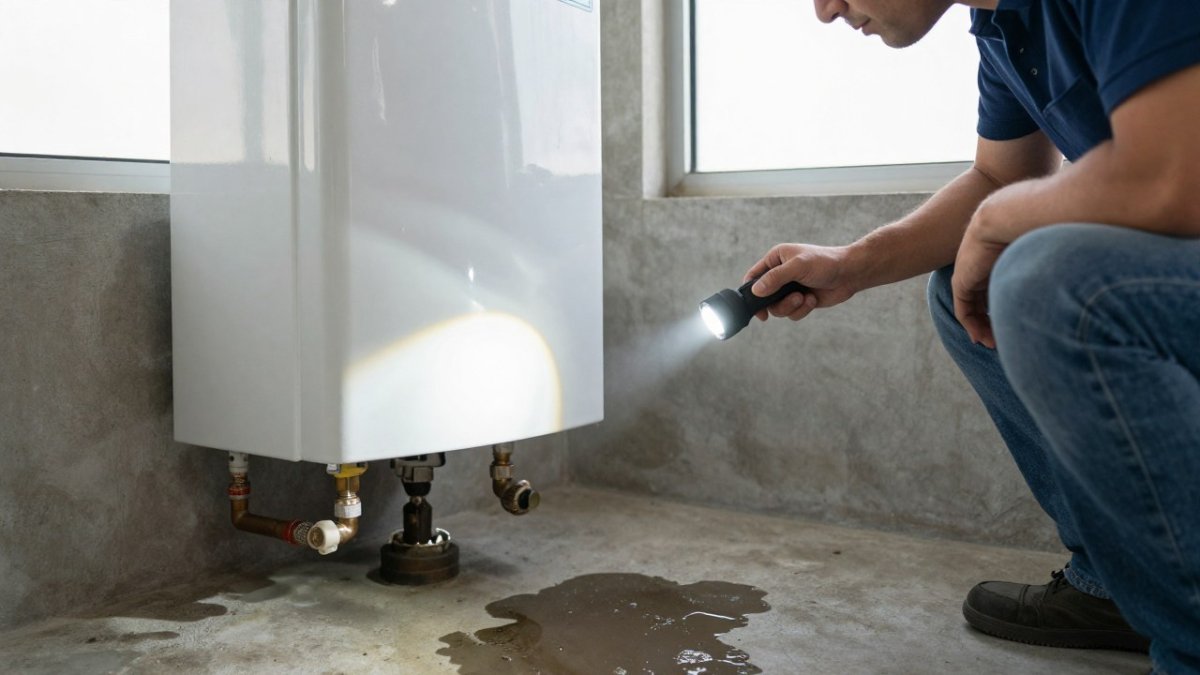
- Water pooling around the base of the tank
- Rusty or discolored hot water
- Popping or rumbling noises from sediment
- Hot water running out sooner than usual
Watch out: A dripping pressure relief valve can signal dangerous pressure inside the tank. Do not cap or plug the valve. Call a professional the same day.
If you see any of these signs, schedule a service visit before the problem gets worse. For leaks or sudden failures outside business hours, Plunge Plus's emergency plumbing services respond to urgent water heater problems.
Prefer a broader view of why heaters wear out early? Our guide to why water heaters fail early covers prevention in more depth.
How Long Water Heaters Last in Colorado and When to Replace Yours
Tank water heaters often last several years, and conditions such as hard water and cold winters can shorten that range. Check the unit's age on the label.
Repair makes sense when the problem is a single failed part, such as a thermostat or valve, on a relatively young unit. Replacement makes more sense when the tank leaks, the unit is old, or repairs keep recurring.
Scheduling Your Denver Water Heater Maintenance Next
Regular maintenance prevents most of the failures covered above. A simple schedule works well for Denver homes:
- Every month: Check around the base of the tank for water, and test a hot-water faucet for normal temperature.
- Every 6 months: Inspect the supply lines and the pressure relief valve.
- Every year: Flush the tank to clear sediment, and have a professional inspect the burner or element and the venting.
- Every 3 to 5 years: Ask a plumber whether the anode rod needs replacing to slow tank corrosion.
Set calendar reminders so these checks happen on time. If the schedule feels like too much to manage, Plunge Plus provides residential plumbing services in Denver and the surrounding area. Homeowners with drain or sewer trouble can review sewer line backup, repair and replacement options on the same site. You can request service online to schedule a visit before winter arrives.
Frequently Asked Questions
Why do water heaters fail in Denver?
Water heaters commonly fail because of leaks in the tank or a burst tank. Other causes include valve malfunction and supply-line failure. Cold groundwater also makes the heater work harder, and mineral and sediment buildup can reduce efficiency and accelerate wear over time. A regular inspection can catch these problems early before they lead to a sudden breakdown.
Can Denver's hard water damage a water heater?
Yes. Hard water leaves mineral and sediment deposits on the bottom of the tank, which insulates the water from the burner or heating element and forces the unit to run longer to reach the set temperature. Over time, this buildup can cause overheating, corrosion, and cracks at the tank base. Flushing the tank periodically and checking the anode rod helps slow this process and extends the life of the heater.
How often should you flush a water heater in Denver?
Flushing a water heater once a year is a common starting point, and homes with hard water may need it more often. An annual flush is a sensible routine for most homeowners. Watch for cloudy or sediment-filled water, popping or rumbling noises, and slow recovery, since these often indicate buildup that a flush can address. If you are unsure how to proceed, a licensed technician can perform the service safely.
What should you do if your water heater is leaking or bursting?
Shut off the power or gas supply to the water heater first, then close the cold water inlet valve to stop more water from entering the tank. If water is flooding the area, turn off the main water supply to the home. Do not touch electrical components while standing in water. Then contact a licensed and insured plumber to inspect the unit and determine whether repair or replacement is the safer option. Plunge Plus offers service through our website if you need help.

